Day 4 – A Date with History at Stirling Castle
Our fourth day in Scotland dawned with the promise of history, as we ventured from Edinburgh to the enchanting town of Stirling. Nestled midway between Edinburgh and Glasgow, we chose Stirling for its fabled castle and the picturesque countryside that surrounds it.
As we arrived in Stirling, the clock had not yet struck noon, and our AirBNB check-in time remained elusive. With bags in tow, we decided to explore the town by foot. Along the way, we couldn’t resist capturing the essence of Scotland, pausing at a bagpipe shop for a snapshot.
Our path led us up a winding, uphill road to the grand Stirling Castle. Along the way, we paid homage to a statue of Robert the Bruce, the valiant Scottish hero who defied the English.
From a distance, we admired the imposing monument to William Wallace, an icon of Scottish independence. Regrettably, the prospect of ascending 246 winding steps dissuaded us from a closer look, respecting Omi’s allergy to steep climbs.
Within the castle’s walls, we delved into the colorful history overseen by James IV, the father of Mary, Queen of Scots. Mary ascended to the throne in infancy due to her father’s untimely demise. The castle’s corridors spoke of regal extravagance, boasting ornate tapestries, and intricately carved wooden furnishings fit for kings and queens.
Our gaze wandered over the statuary and gargoyles that adorned the castle’s architecture, breathing life into its stone walls.
A stroke of luck introduced us to an animated young tour guide who narrated the castle’s history with infectious enthusiasm. His vivid storytelling painted a picture of the countless sieges and battles that unfolded around these hallowed grounds, including the historic Battle of Bannockburn involving Robert the Bruce in 1314.
He also recounted the ill-fated Jacobite escapade near the castle, which ended predictably after making their encampment in range of the castles’ guns.. This encounter mirrored the tragic outcome of the infamous Battle of Culloden near Inverness, a chapter in Scottish history we would explore in our forthcoming adventures.
As the sun approached the horizon, we descended the cobblestone streets back into town. Our bags retrieved, we embarked on a longer-than-expected trek to our AirBNB near the riverbank. Our perseverance was rewarded with a serene view of the River Firth and its tranquil shores. Opening the balcony window, we were serenaded by a neighborly choral and recorder group, their notes weaving the melodies of traditional Scottish tunes.
Subsequent days found us on leisurely birdwatching walks along the riverbanks, where we marveled at the presence of guillemots and razorbills, seemingly far from their maritime habitats. It soon dawned upon us that this stretch of the river was influenced by tides, forming part of a broader estuarine ecosystem hosting a diverse array of coastal bird species.
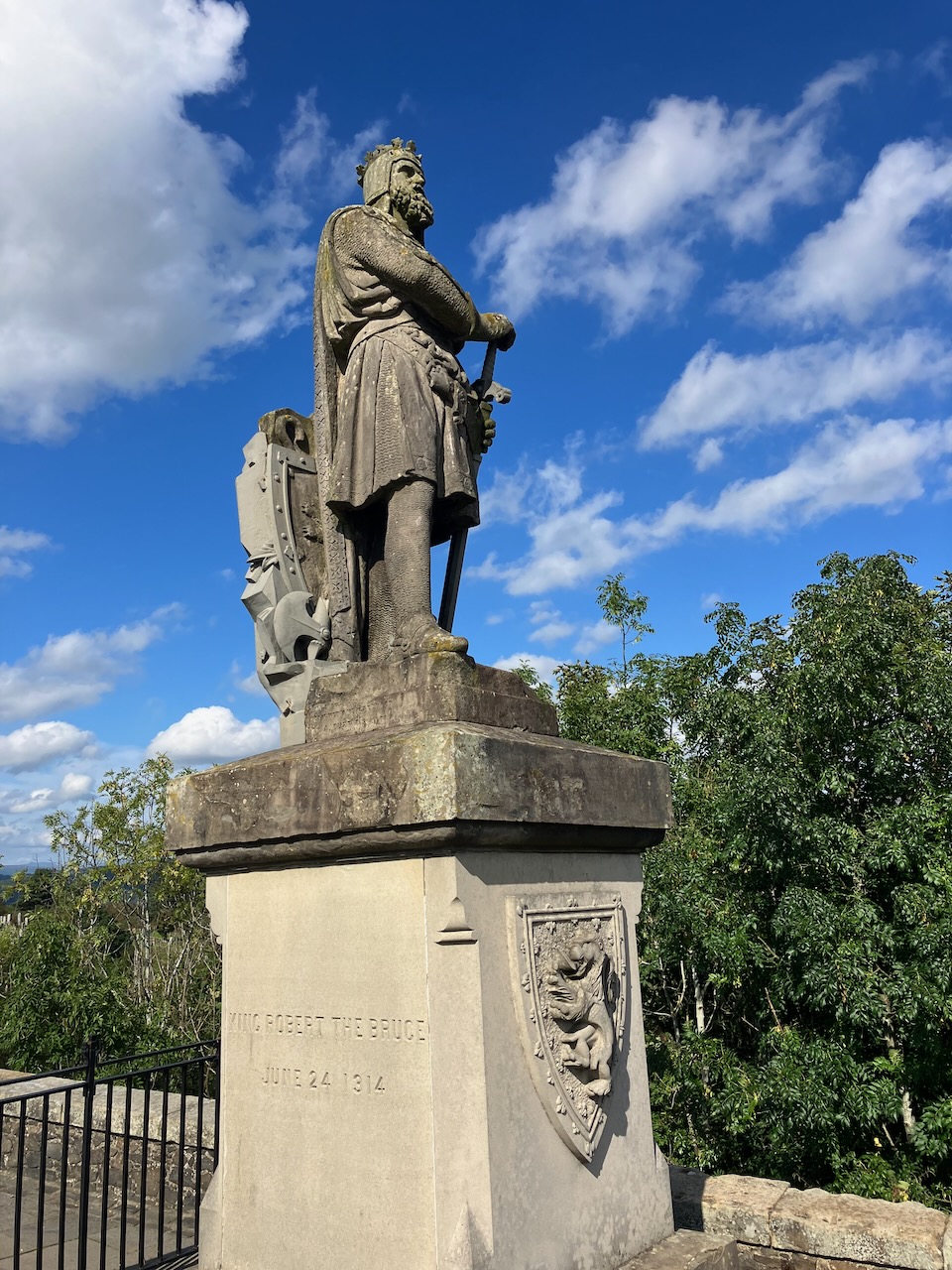
Robert the Bruce
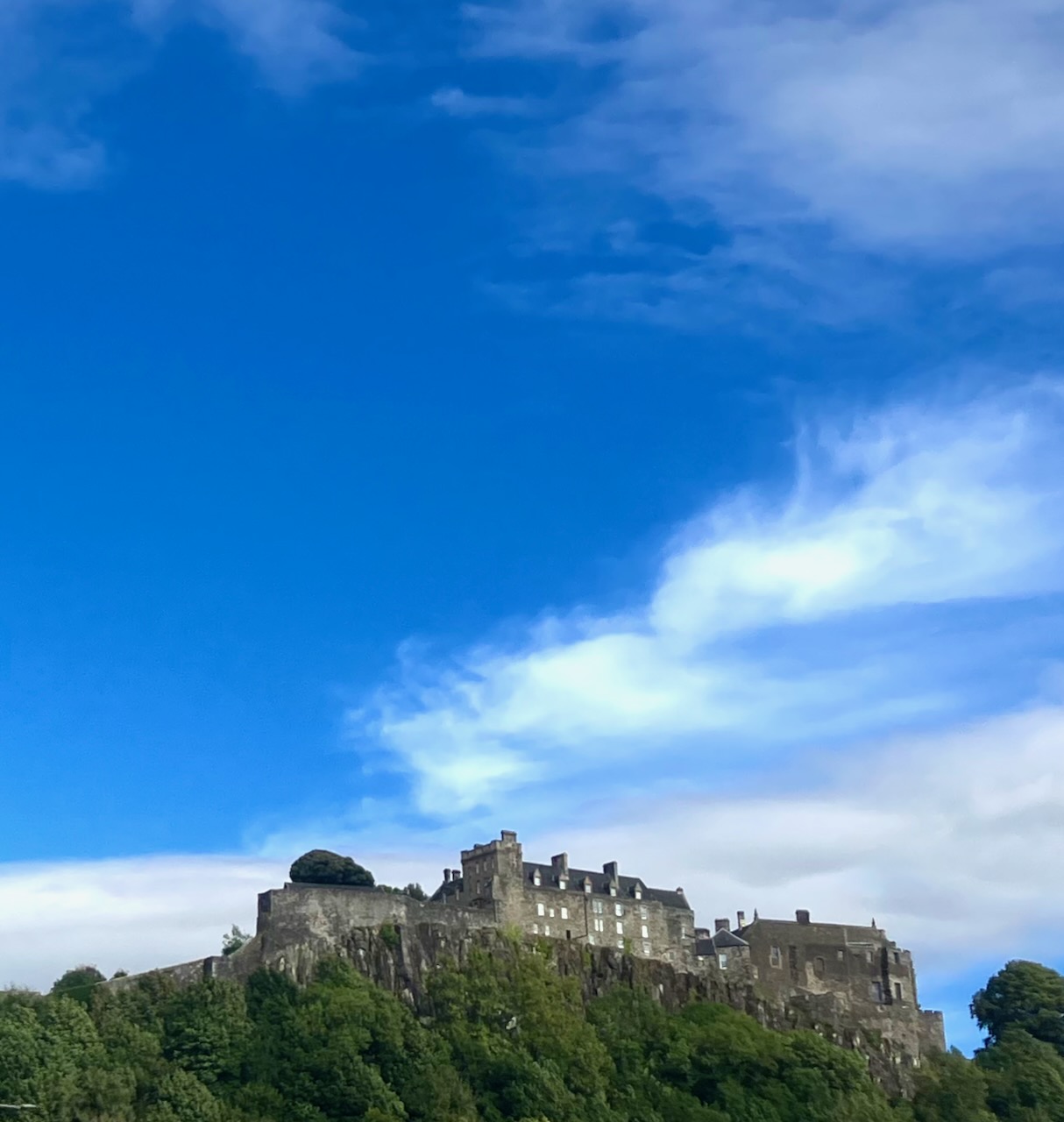
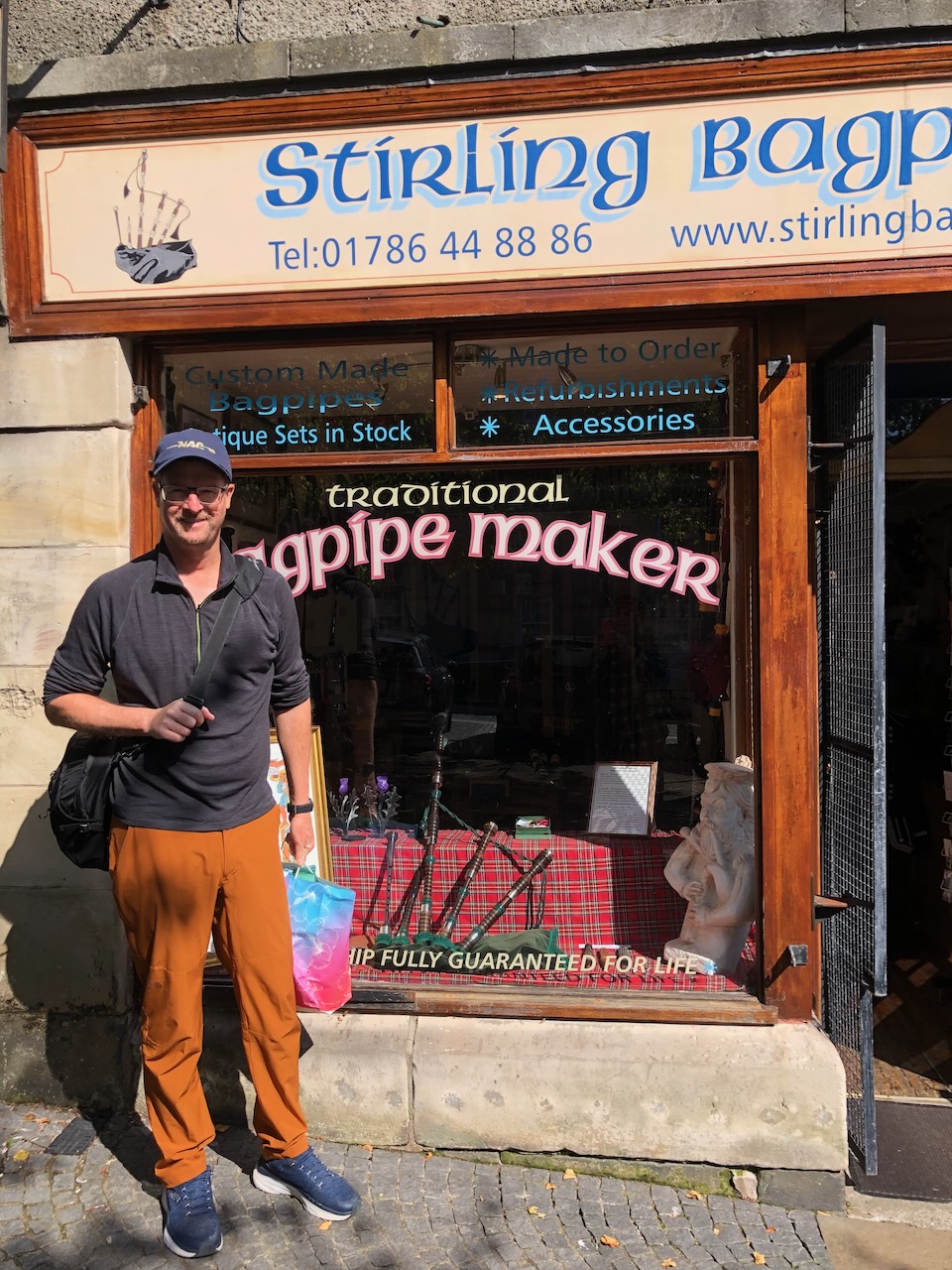
Not in Kansas anymore!

At the Stirling castle gate
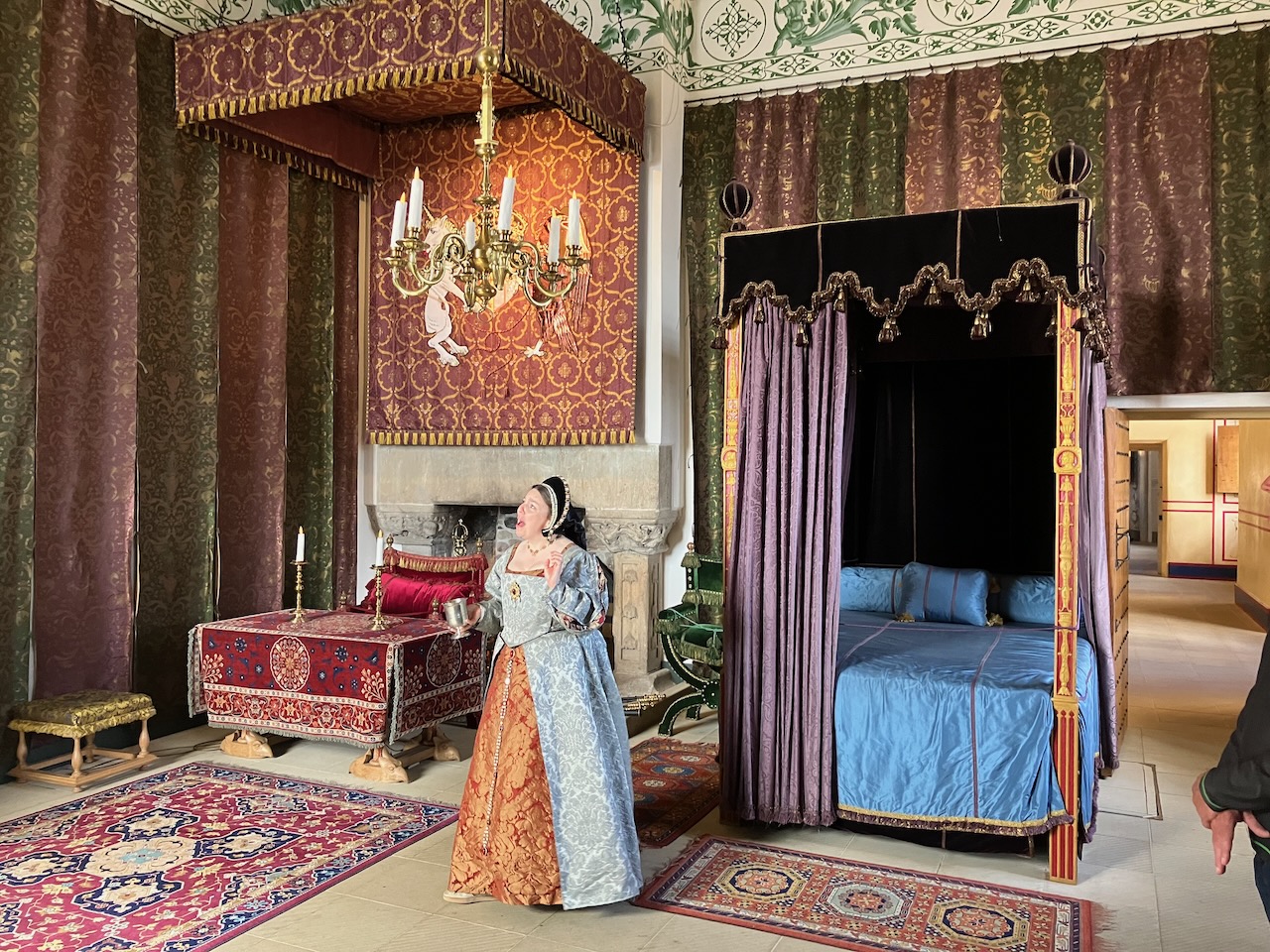
Actor playing an aide to the Queen
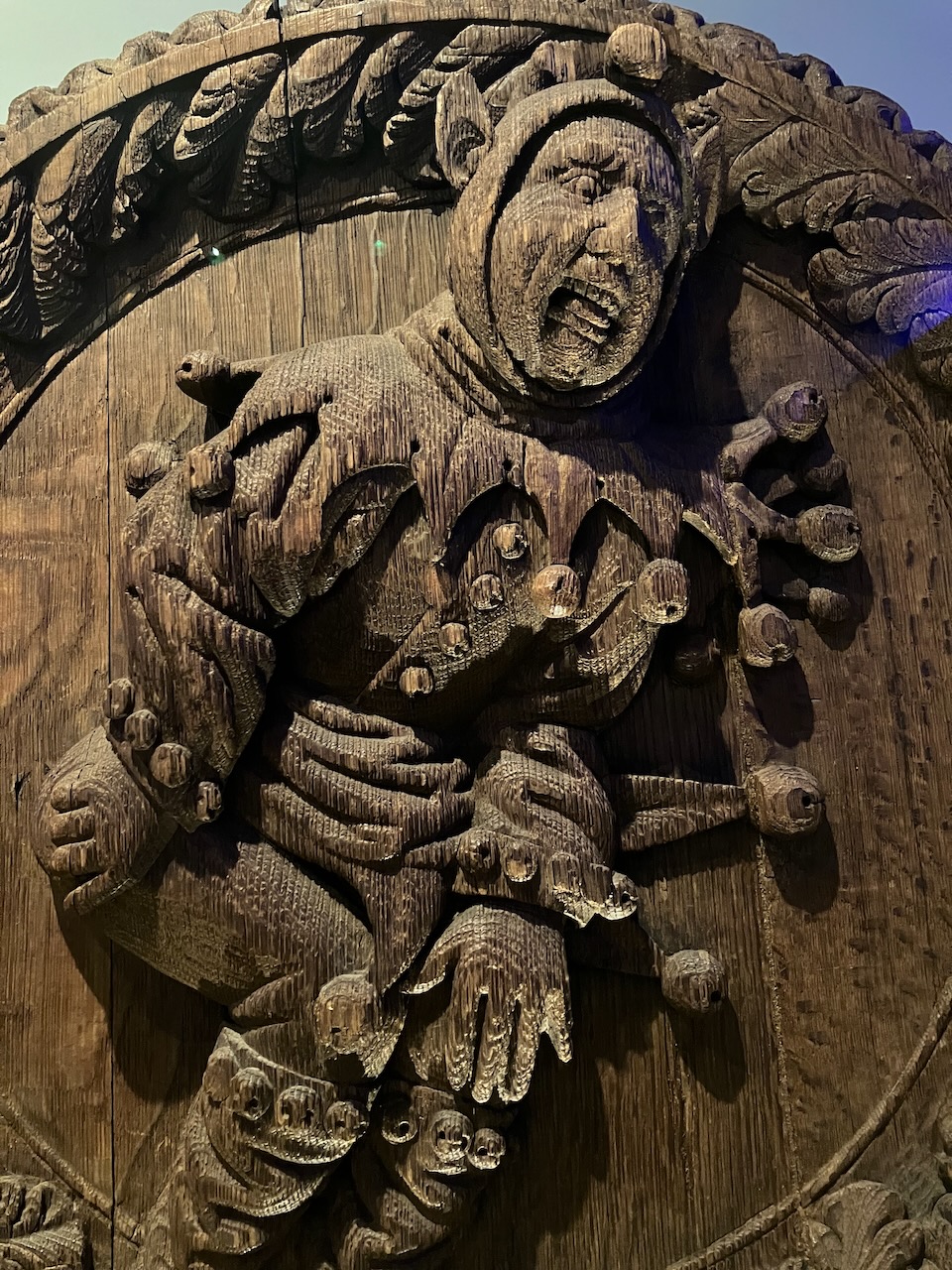
Carving Detail
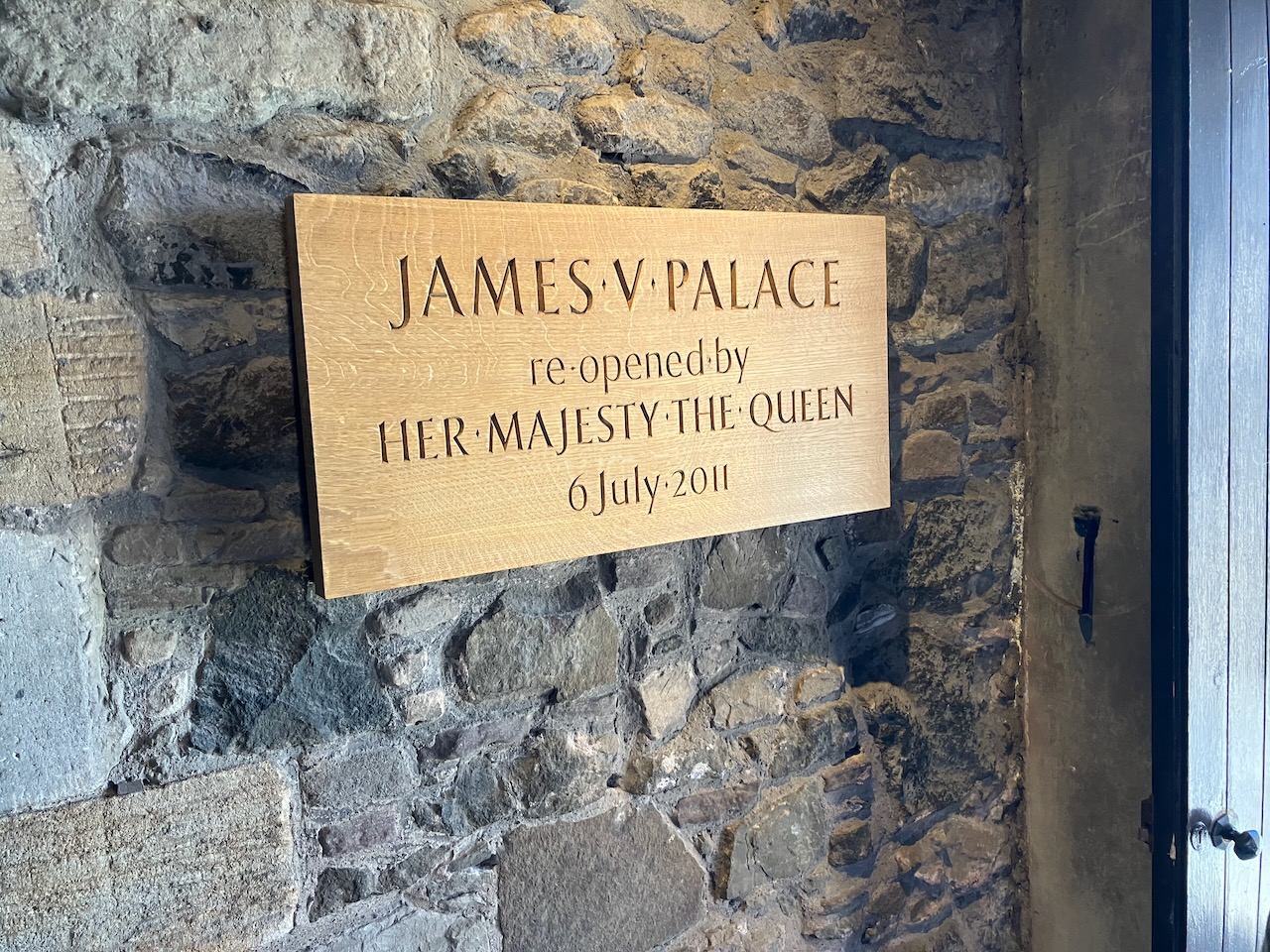
Mary Queen of Scots’ dear old Dad, who died shortly after her birth.
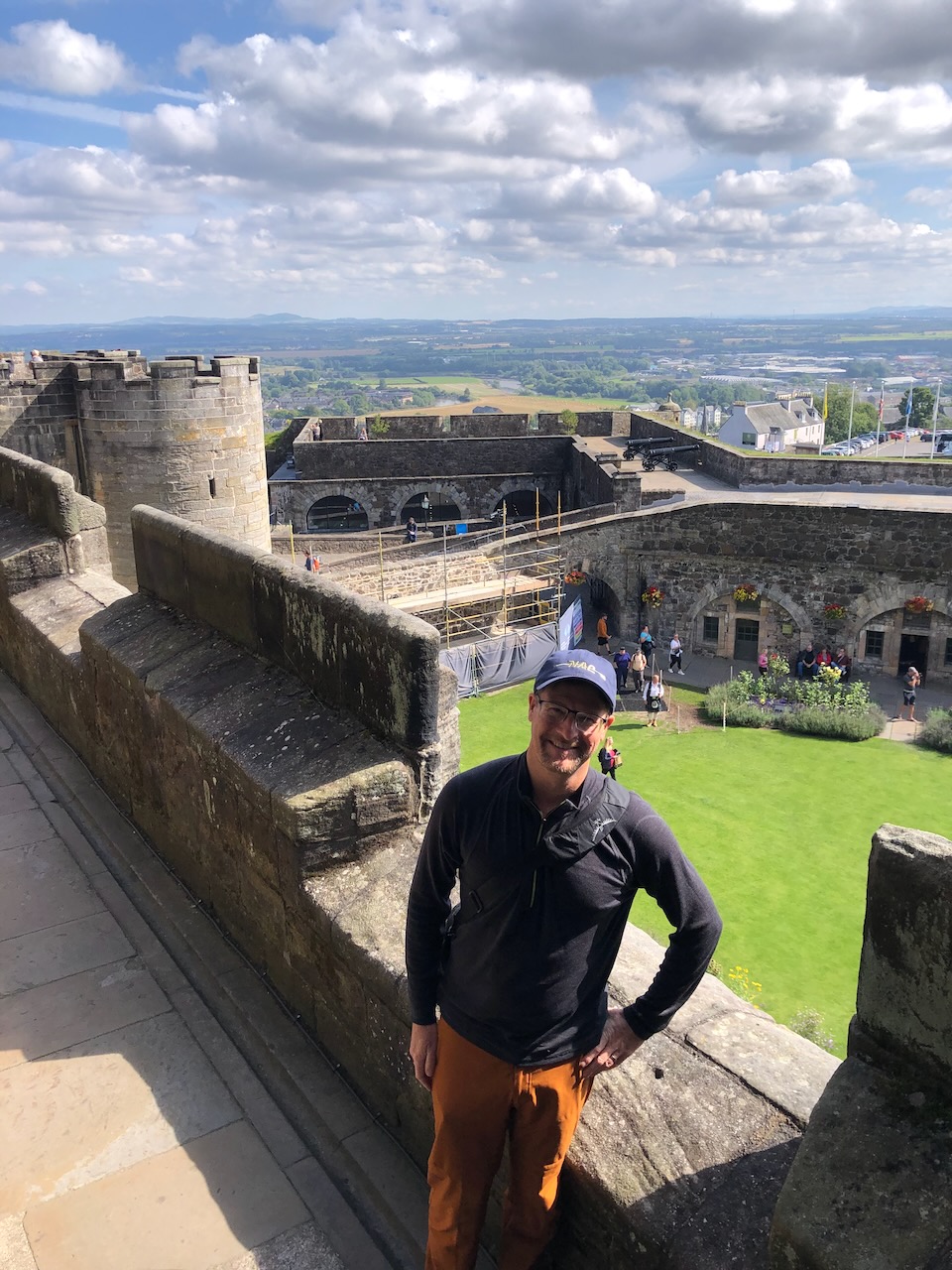
Sunny weather at the castle
Day 5 – Exploring Cambuskenneth and Discovering Royal Graves
Our next day led us to the ruins of Cambuskenneth Cathedral, where a bell tower stood as the most prominent relic. Though only the arched entryway of the cathedral remained, the grounds held secrets of historical significance.
Legend suggested that a quarter of William Wallace rested here, his body dismembered and scattered across Scotland to prevent his followers from gathering at a single grave. While this tale remains unverified, the grave of James III, whose identity was far less fragmented, graced the site. We marveled at the ease with which we could stroll from our AirBNB across the river via a footpath to King James III’s resting place.
Our exploration extended to the community garden, where apple trees, encircled by barbed wire, bore no “Do Not Pick” signs. We indulged in a few apples, guilt-free.
Forgoing a visit to the Wallace Memorial, we instead sought the warm embrace of the “Lion and the Unicorn,” a lively ancient pub nestled in Thornhill. There, we engaged in spirited conversation with a group of Scottish diners. They were interested to learn about Omi’s Halifax birthplace and we celebrated our shared Canadian-Scottish heritage. The ties between Canada and Scotland, we would soon discover, run deep.
After a hearty lunch (and some ale), we wandered through the medieval village of Thornhill, relishing panoramas of rolling green hills adorned with sheep and horses.
September 4th saw us packing for an 8-minute cab ride to the train station, where we boarded a train bound for Glasgow. Our ultimate destination awaited, the Isle of Barra in the Outer Hebrides.
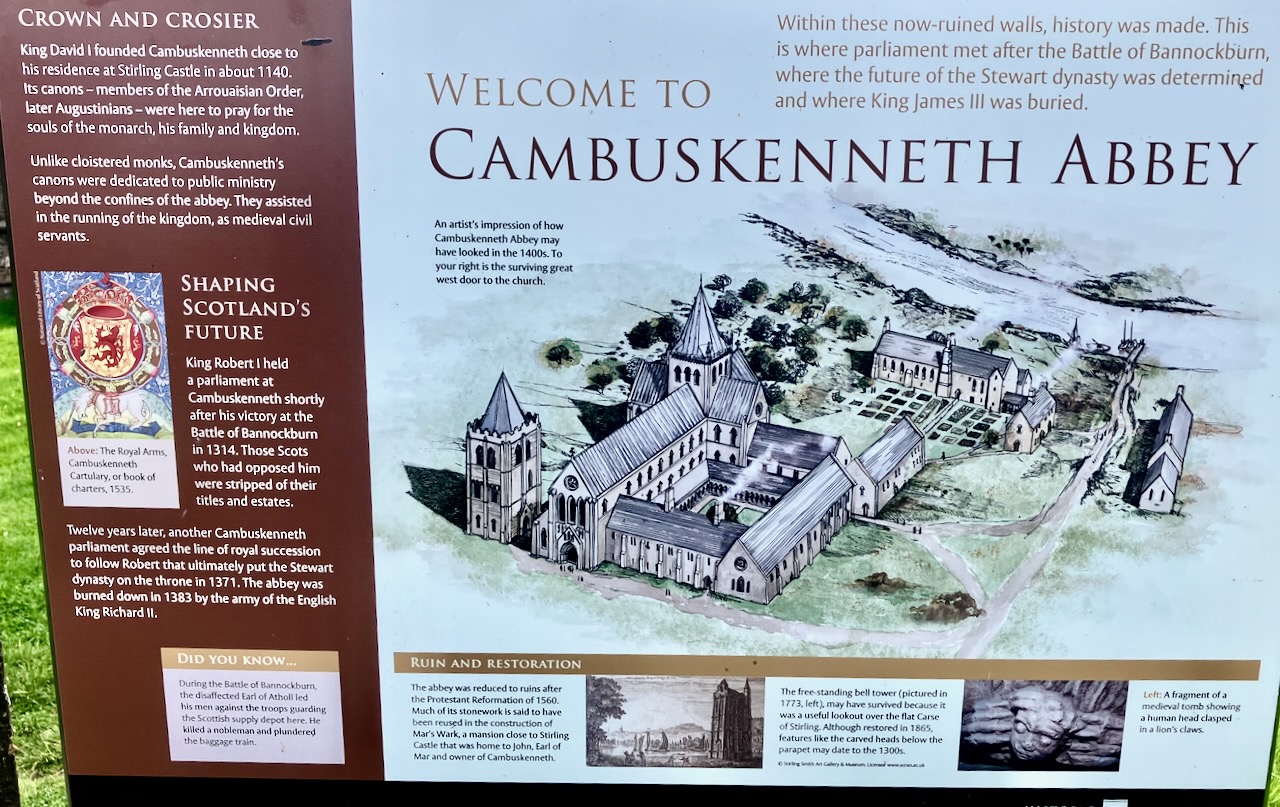
Cambuskenneth Abbey ruins that we could easily see from our AirBnB
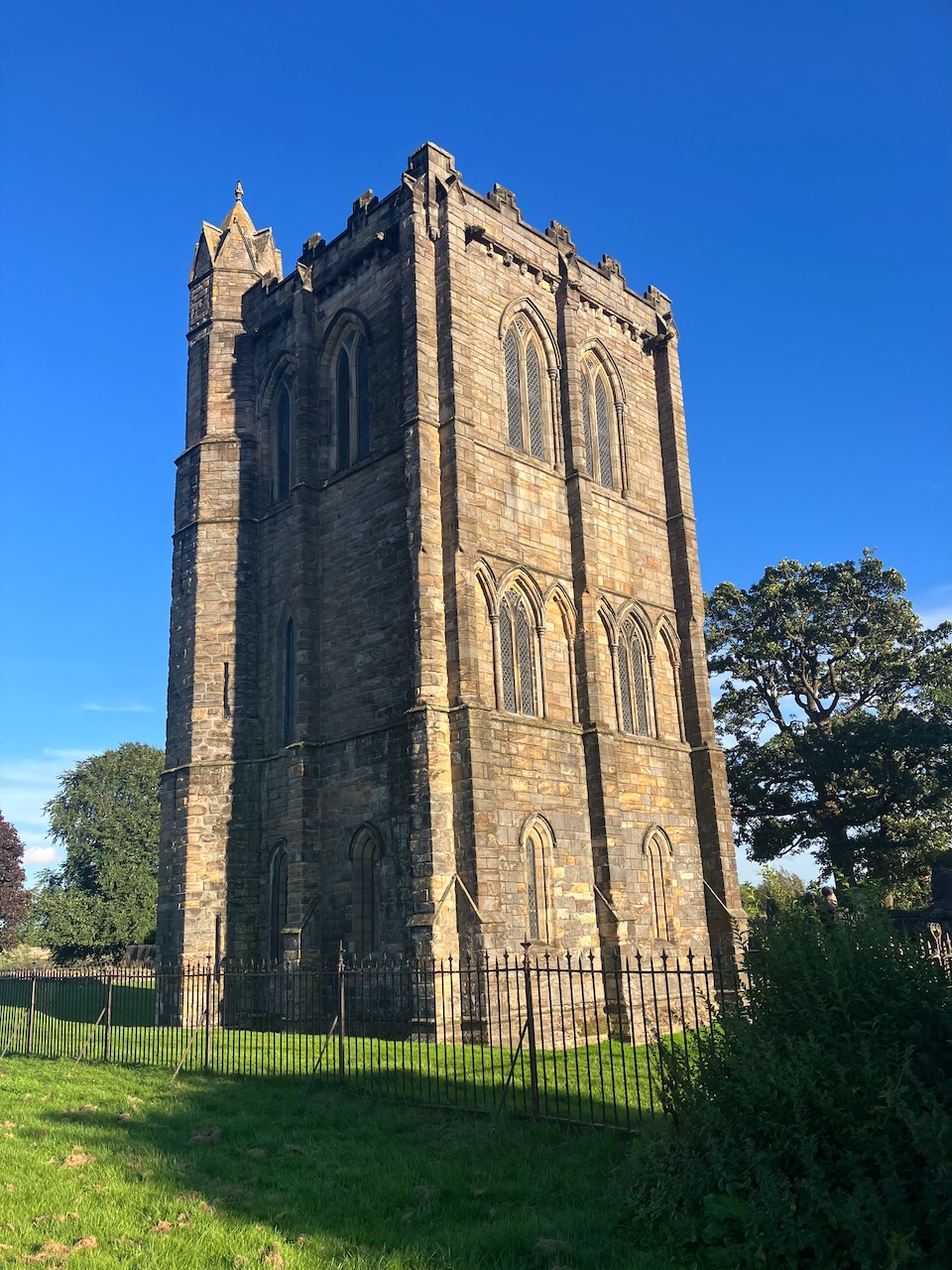
The Bell Tower

King James III Grave
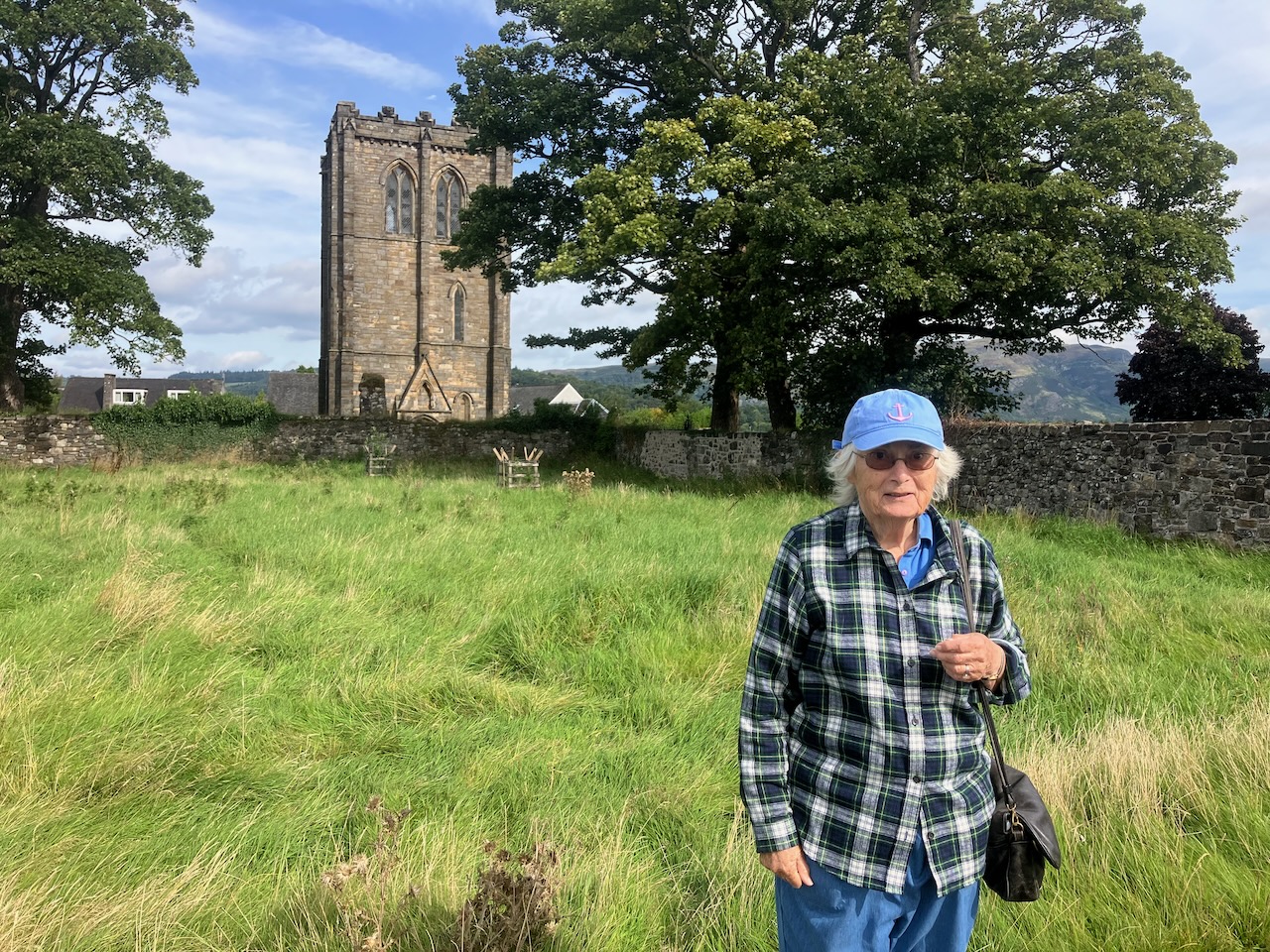
View from the orchard


Peaceful grounds with arched entrance to the abbey ruins on the far left

The Unicorn and the Lion, since 1693
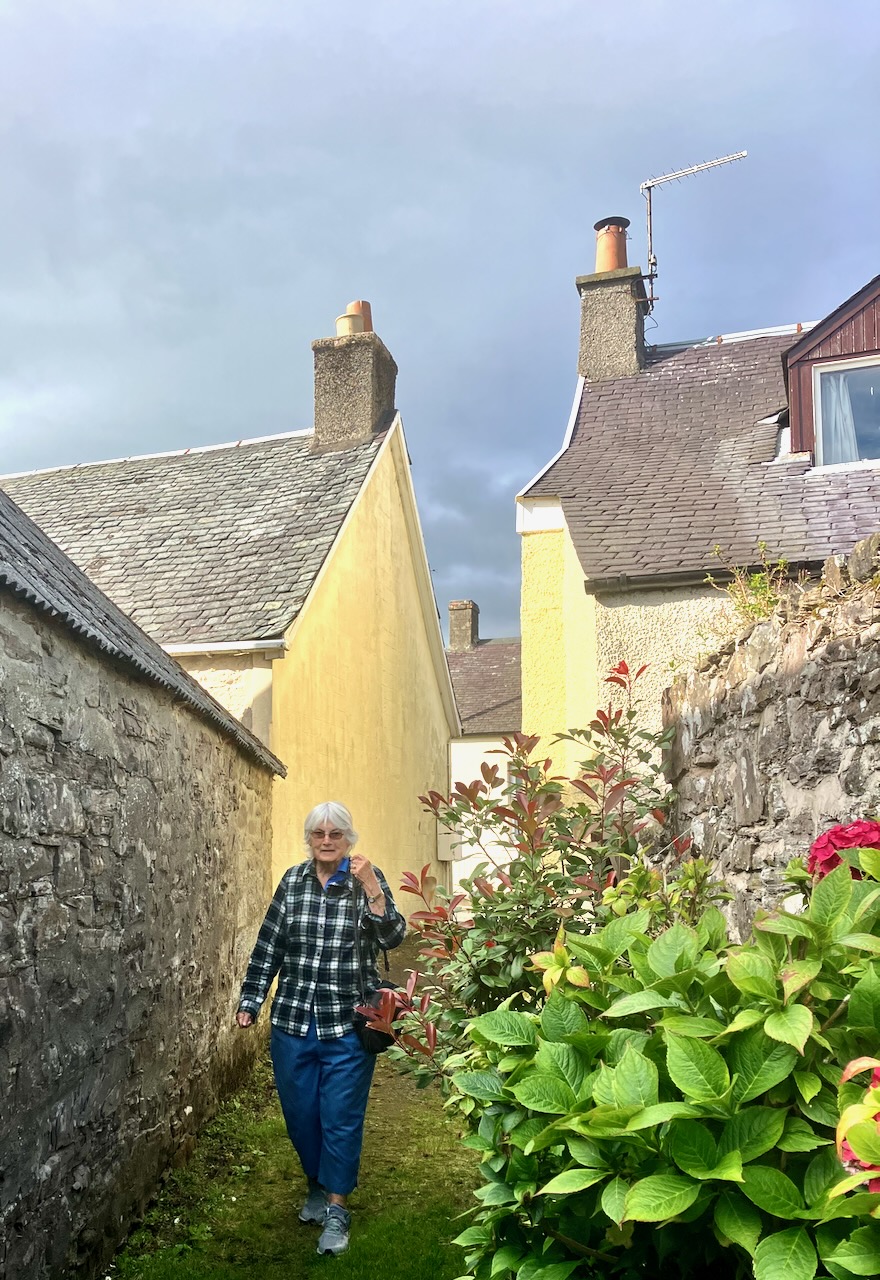
Roaming in Thornhill Scotland
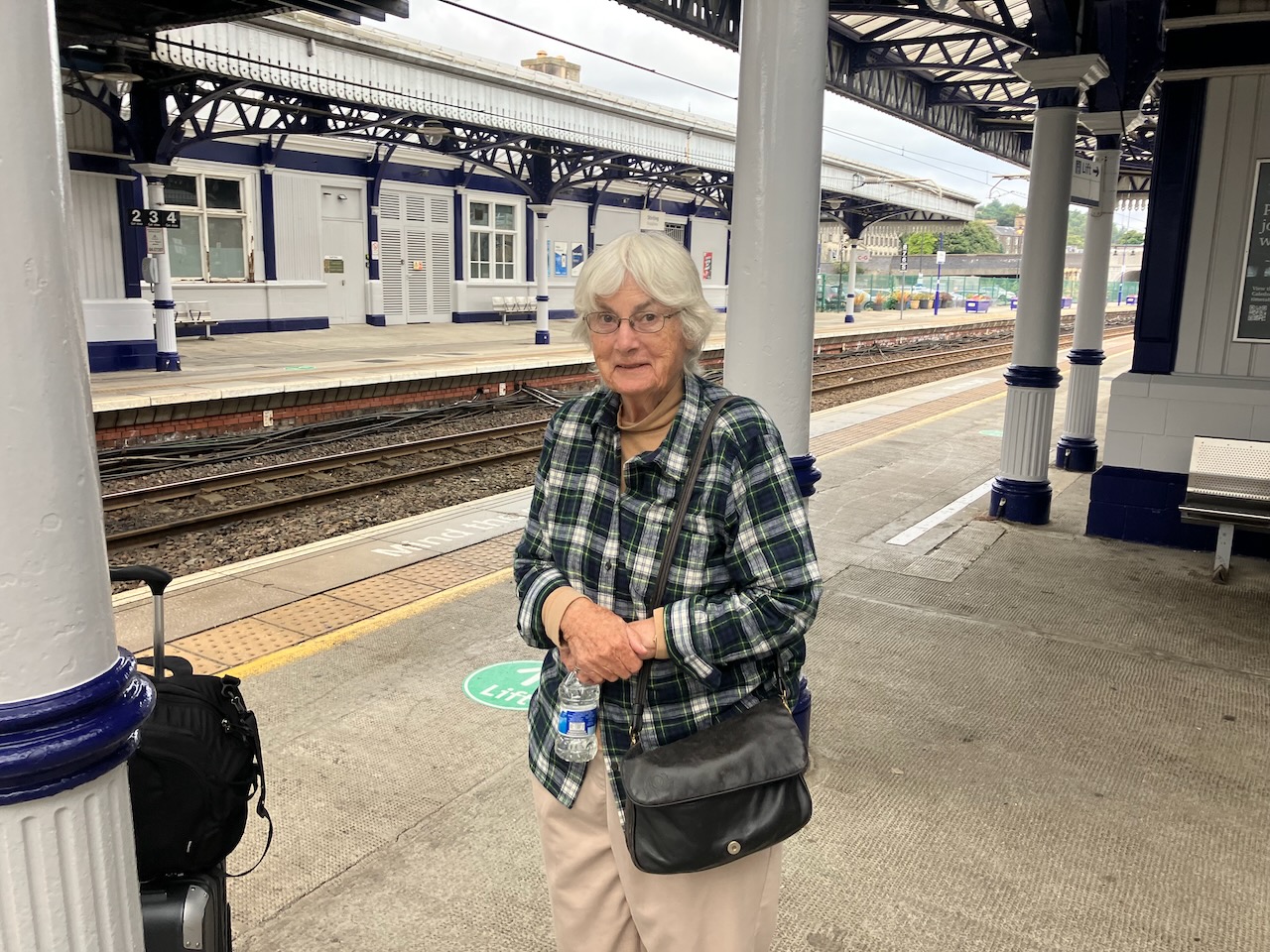
The train portion of our journey. 30 minutes to Glasgow.
Next up: Isle Barra!
 Omi's Travels
Leave a comment