Embarking on a road trip through the heart of Scotland, our journey began in Glasgow, where we picked up a rental car. With the open road before us, our first destination was the picturesque Loch Lomond at a pebbly beach in Duck Bay, and then we proceeded to the charming village of Luss. There, we soaked up the sights from a dockside vista point, taking in the serene waters and the verdant forest adorning the opposite shore.
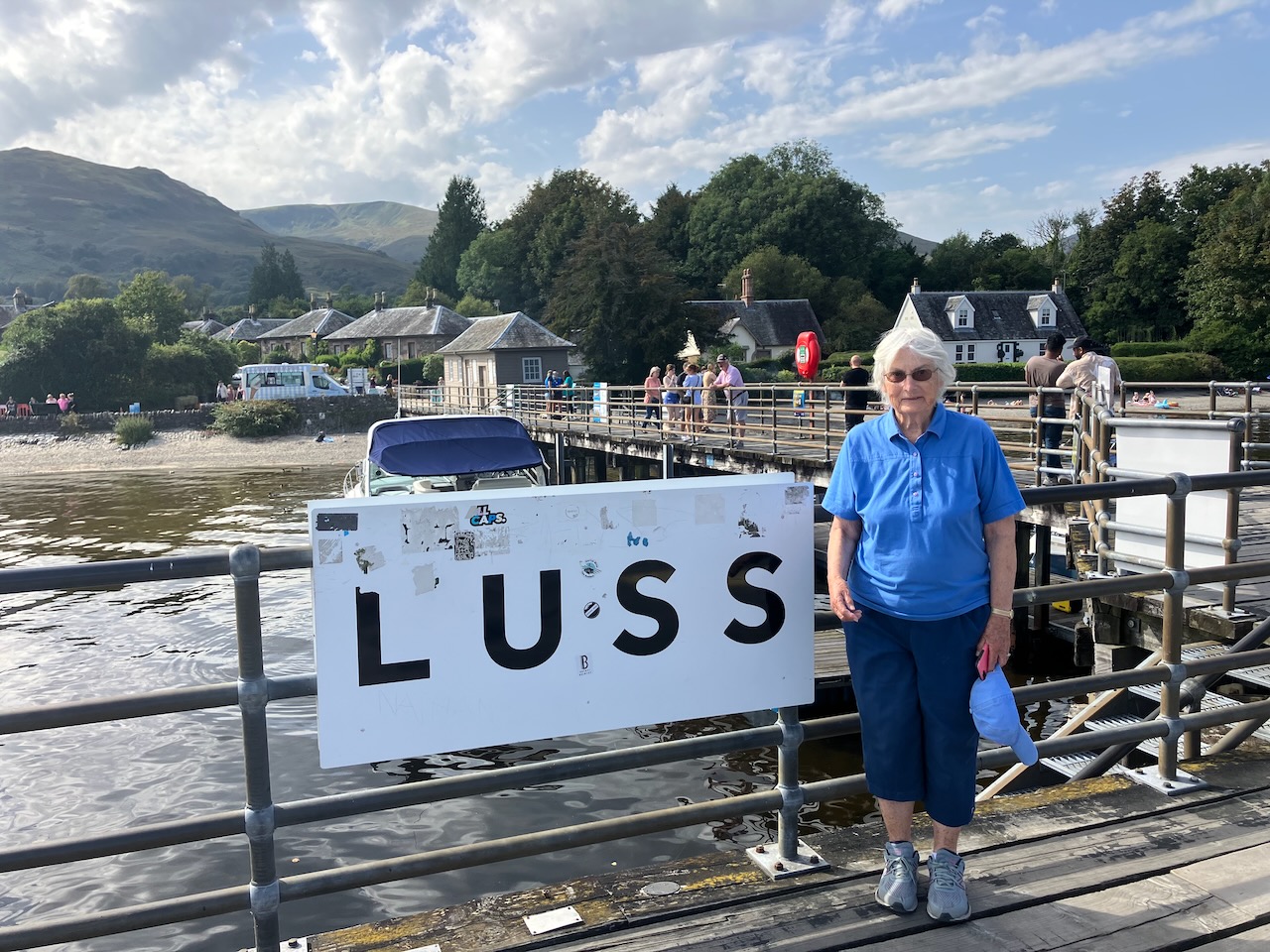
We made a brief pit stop to stretch our legs at the Village of Luss.

Luss interlude
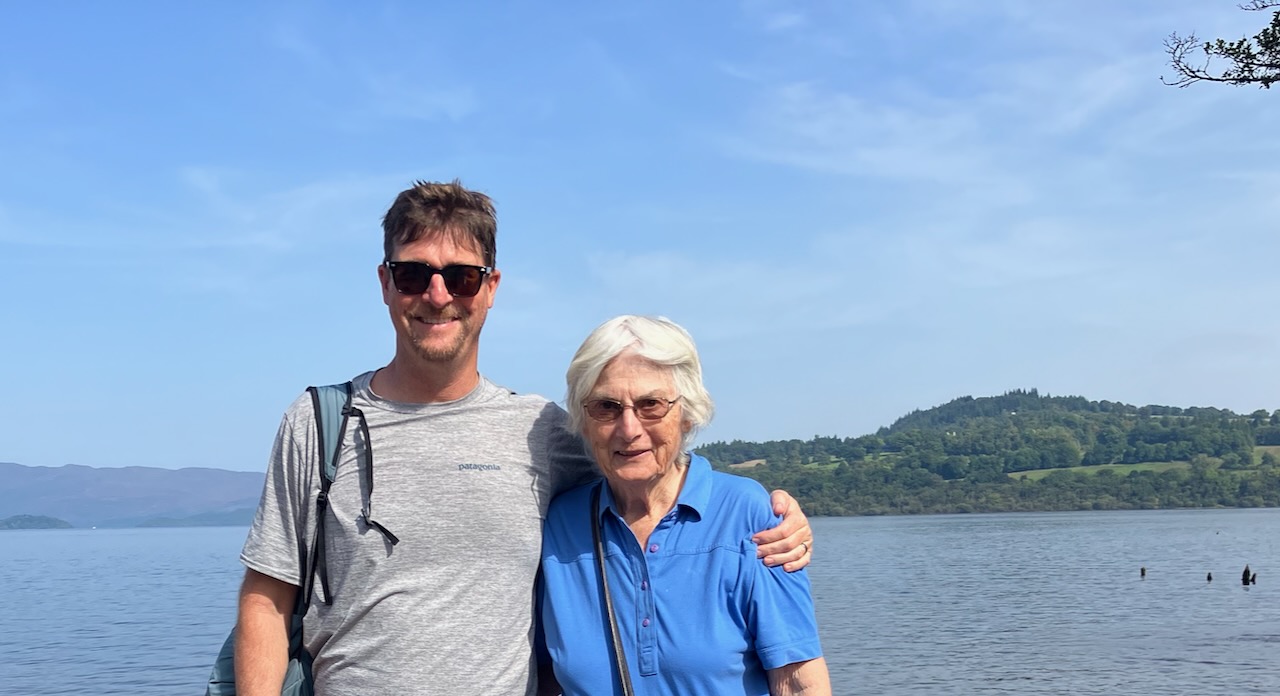
Of course I went for a swim at the beach near Duck Bay – a misnomer as Omi pointed out. Not a water bird to be seen.
Continuing our northern ascent, we visited the Falls of Falloch, which is just fun to say, like the Firth of Forth. We embarked on a brief hike leading to a viewpoint overlooking the falls, where we ate illicit apples. Although the Falls of Falloch parking area was teeming with visitors, I navigated our right-hand drive car with growing confidence, deftly maneuvering through tight parking spaces. Omi only had to remind me once or twice to stay on the left side of the road as we resumed our road journey.

Falls of Falloch
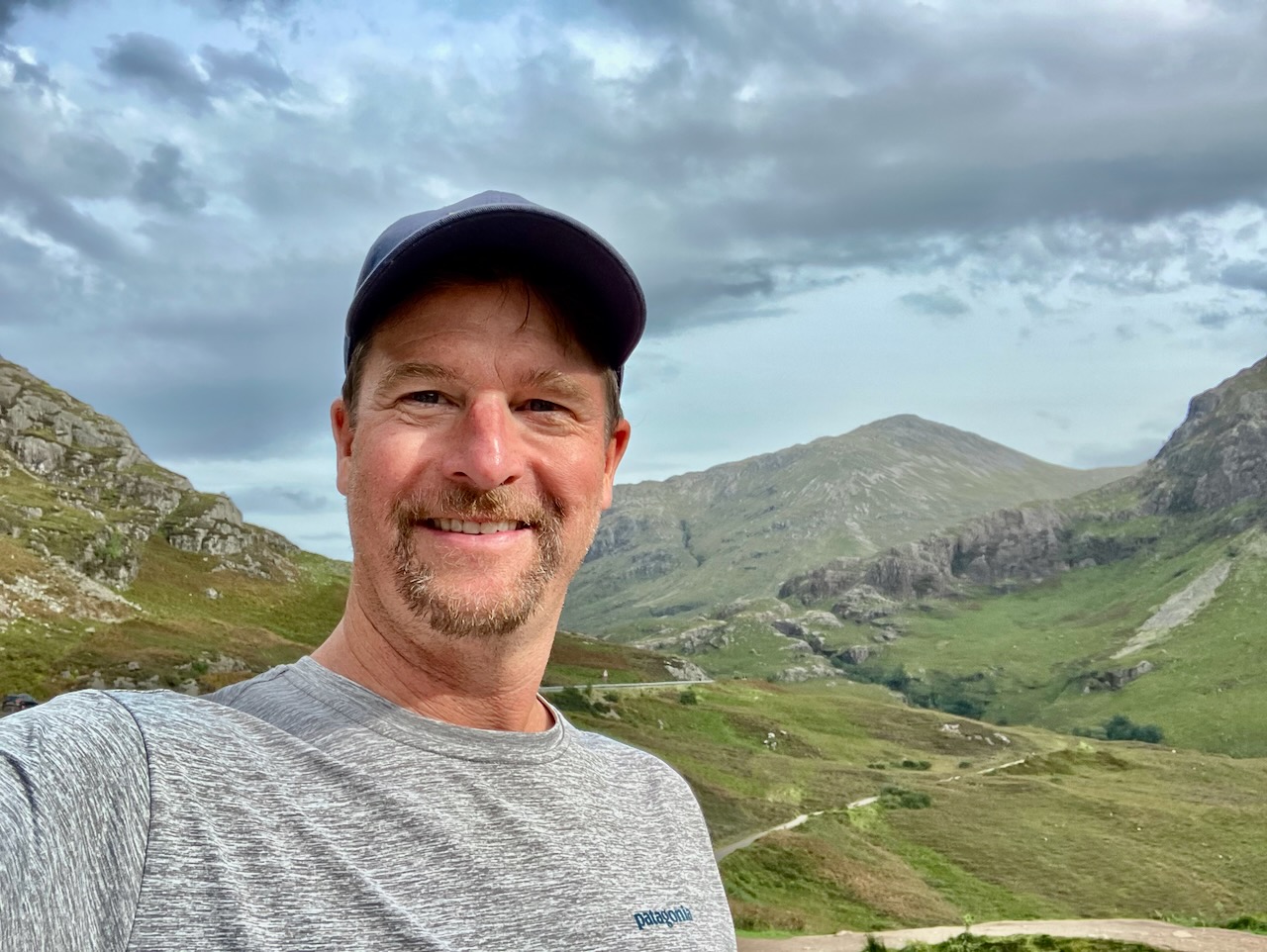
Our next stop was the treeless and austere but dramatic highland landscape near Glencoe.
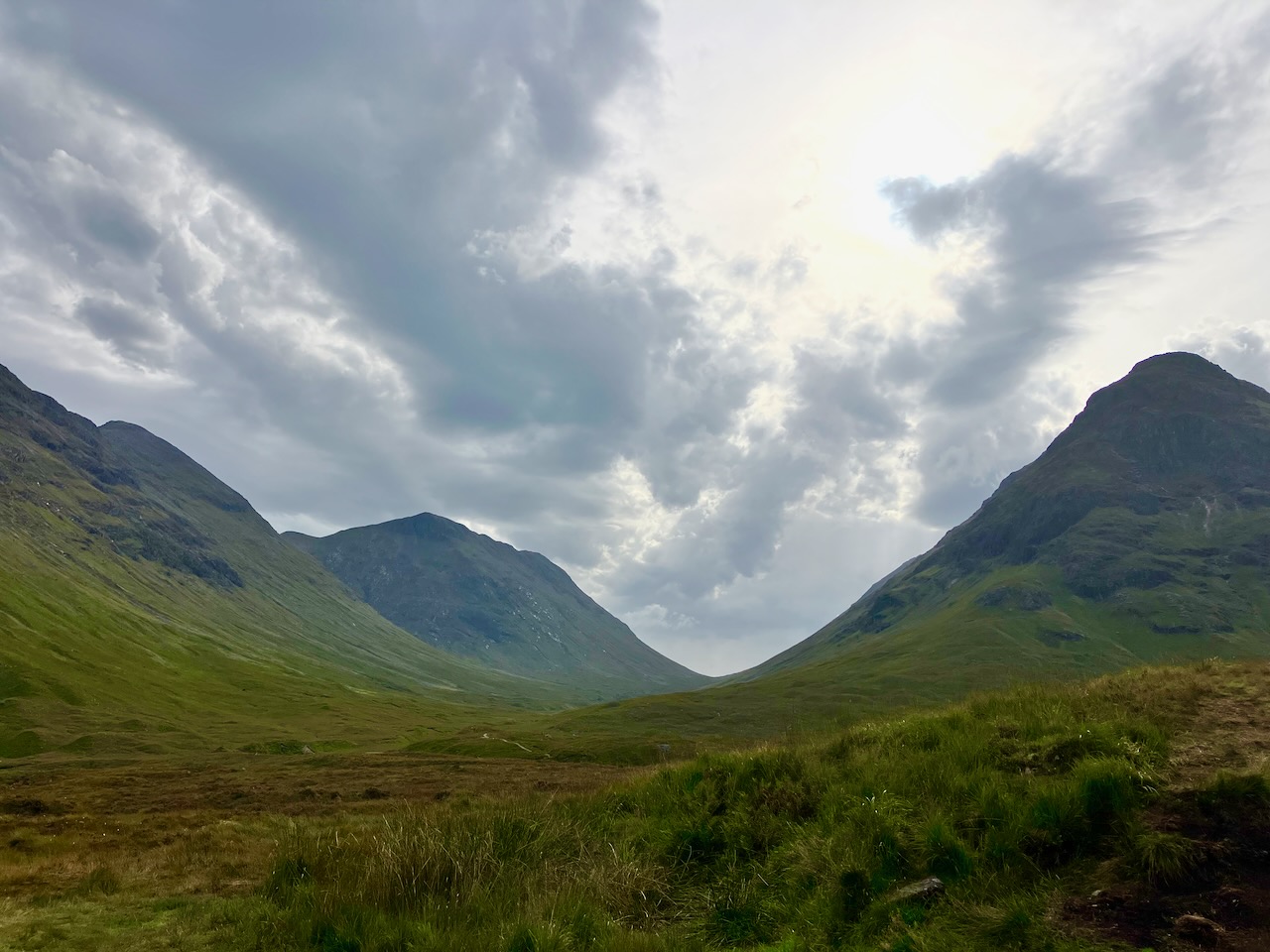
First stop in the highlands
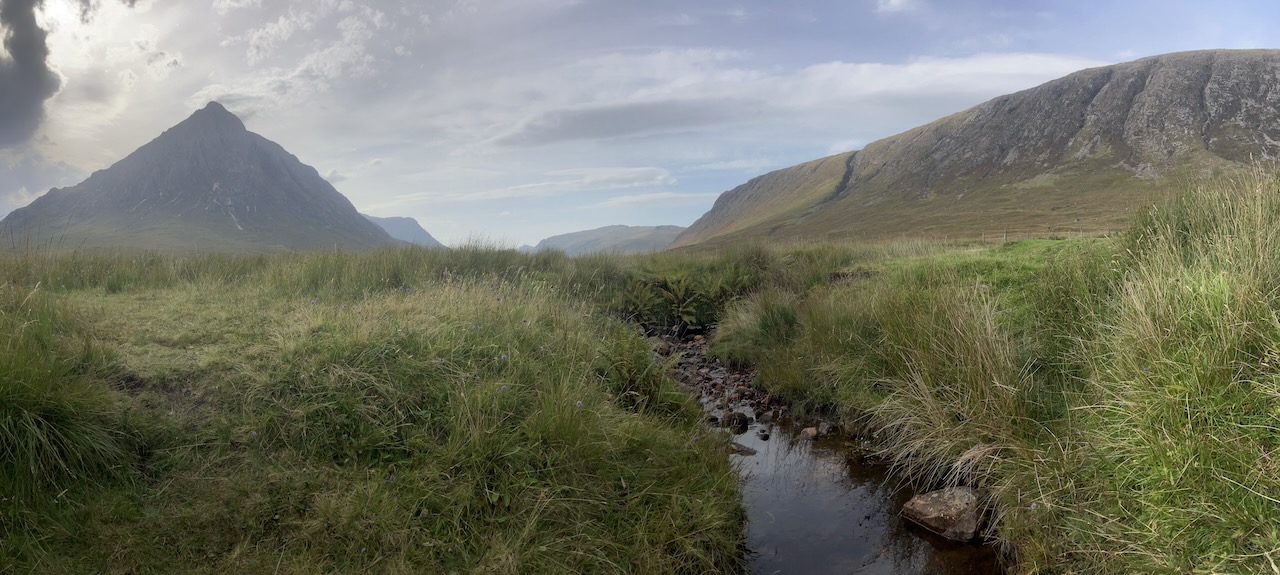
As we ventured into Glencoe, the scenery became even more imposing. Towering mountains encased us, and the glen’s sweeping vistas revealed a tumultuous history. It was here, in this seemingly tranquil valley, that the infamous Glencoe Massacre occurred in 1692. The mountains, veiled in mist and history, seemed to whisper the tales of bygone clans and their struggles. Drowning out the mountain’s whisper, a bagpiper set up shop at a scenic overlook where we were framed by dramatic valleys and glacier carved cliffs.
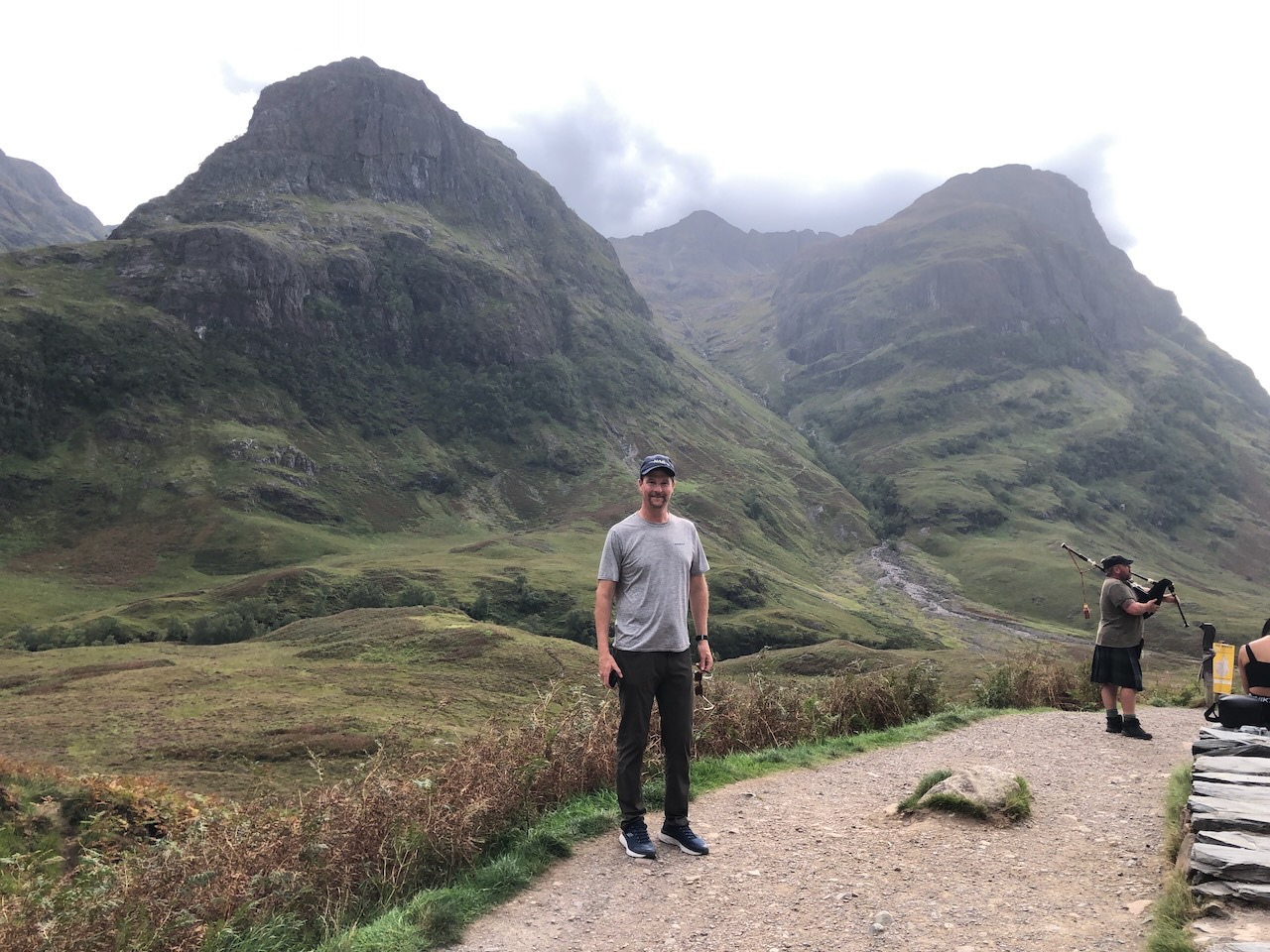
Glaciers roamed here. Now, just tourists accompanied by bagpipe.

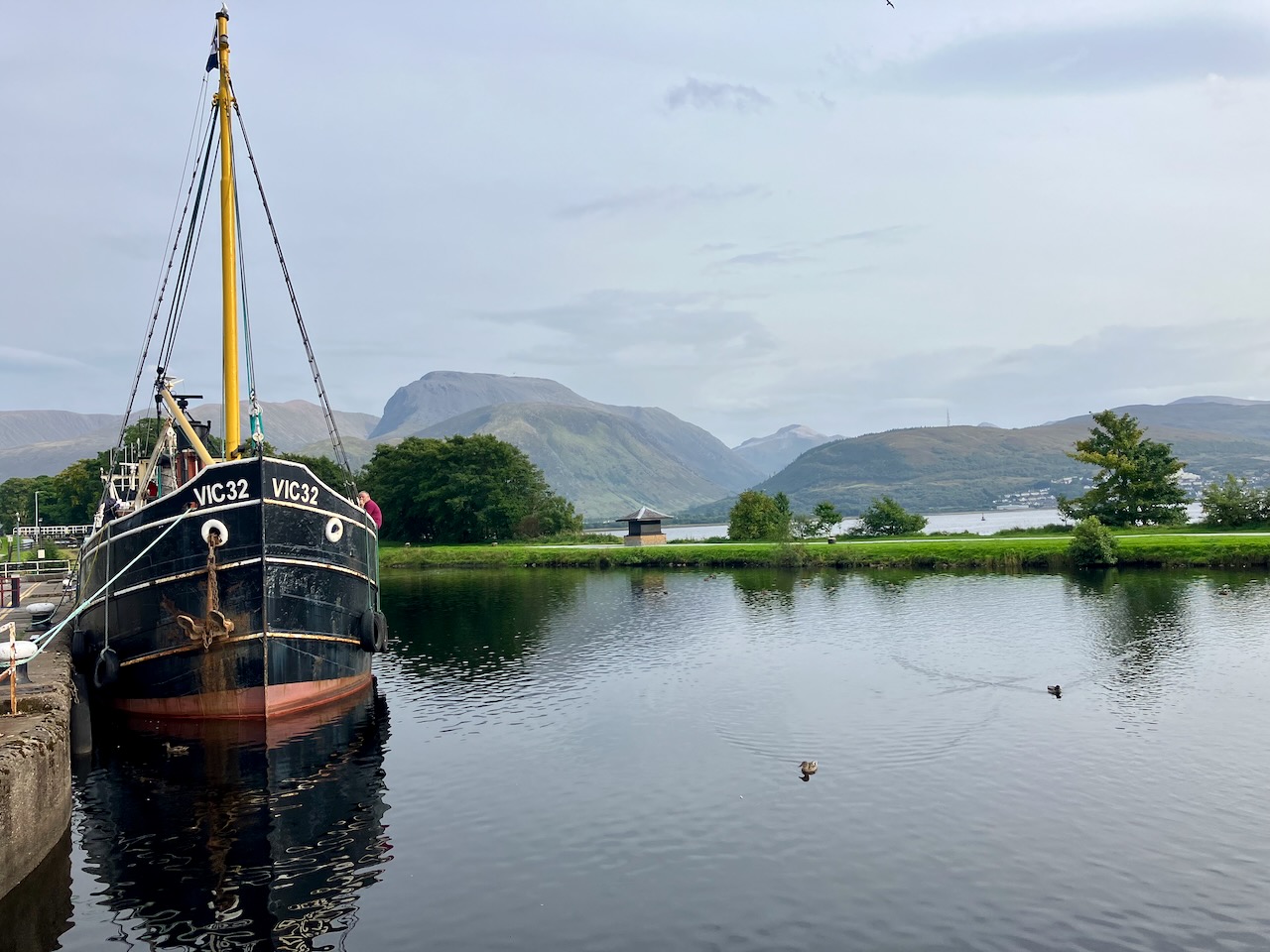
Next we made our way to the Caledonian Canal, nestled between Fort William and Fort Augustus. A peaceful stroll along the canal’s banks afforded us the opportunity to witness powerboats and sailboats queued up at the locks. Omi said it reminded her of the locks we had seen in Canada. A informative sign revealed that the Canadian canal system was a twin of the Caledonian canal in Scotland.


Next on our itinerary was Fort Augustus, where we found lodging at the Highland Club. Our check-in experience was a delightful encounter with Blake. Blake is exceptionally knowledgeable and he entertained us with detailed stories of the monastery’s origins. He told us that despite being of English extraction, he found a home here in the highlands, where the local Scots put up with him. His charming young family, including a newborn son we met in the days to come, added to the warmth of our stay. His daily efforts ensured that our every need was attended to. In particular, he printed up a copy of the history of the Benedictine monastery as a unique souvenir for Omi.
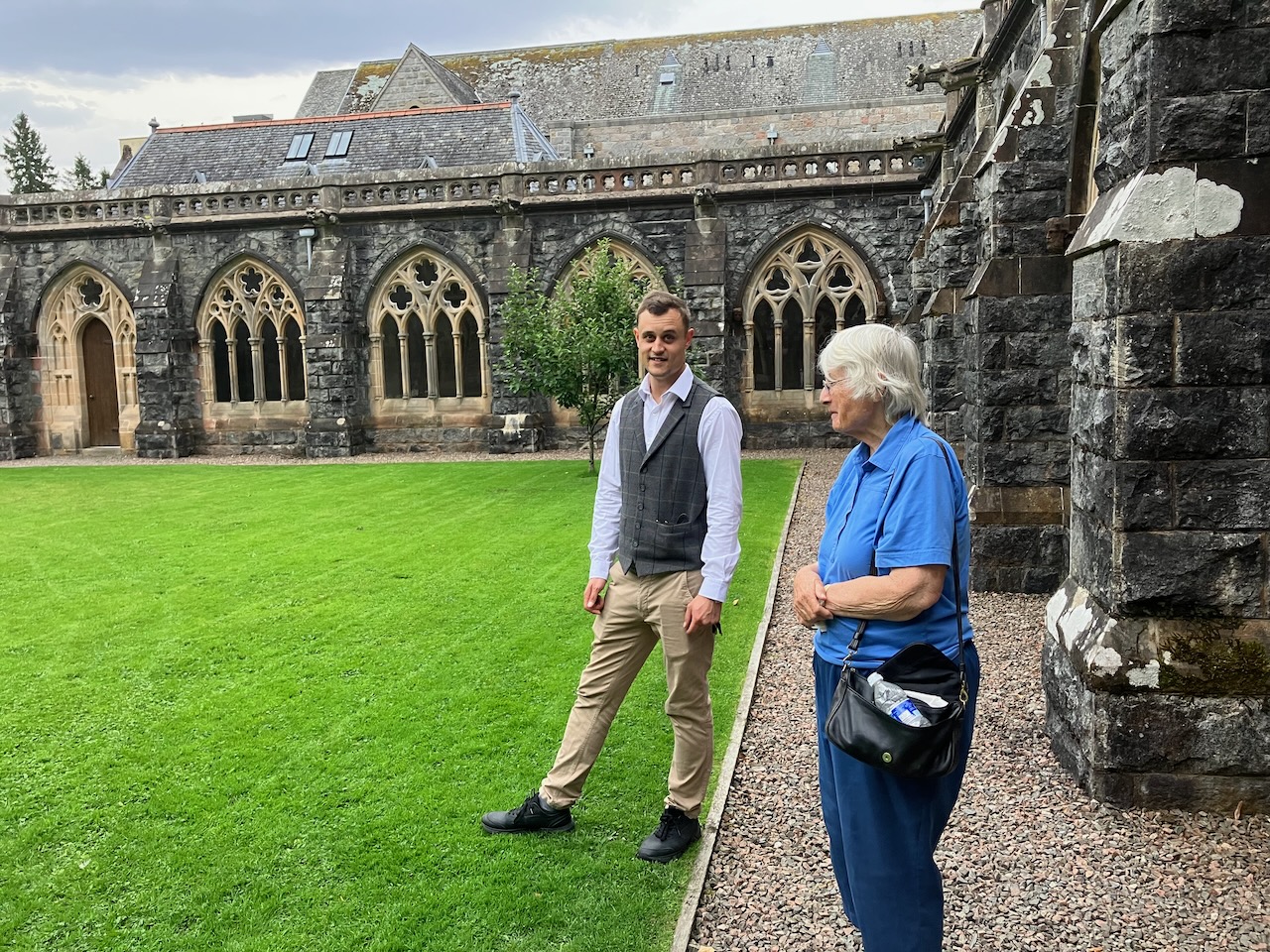
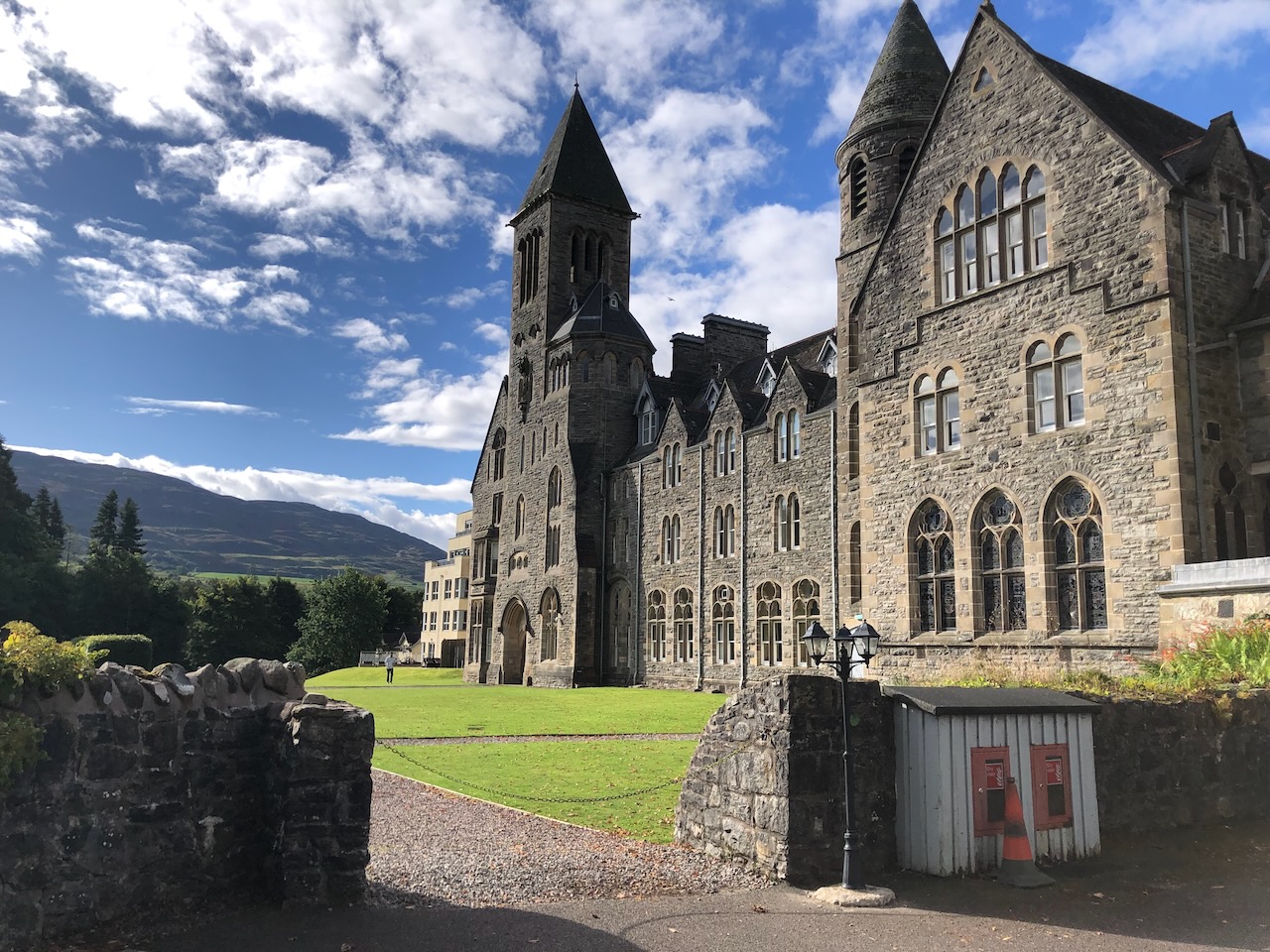
The Highland Club in Fort Augustus revealed a rich history. It was first a military barracks – with cannon bulwarks that were still visible to the discerning eye. An important early military figure was a highland nobleman who tried to appease both local highland Jacobites and government forces. He ultimately sided with the Jacobites, and for this transgression he tragically lost his head. Later in its history, the site was transformed into a Benedictine monastery, featuring a contemplative inner courtyard surrounded by renaissance-era housing for monks. Modern contemplation, it seems, involves a massive game of chess. Too bad Jacob Alcock wasn’t with us to take up the challenge.

Today, this historic building has been redeveloped by the current owner, who invested some millions to transform it into luxury apartments and rental units. It is worth noting that the Benedictines relinquished their rights to the building after becoming embroiled in an abuse scandal in the 1990s. That aside, our stay at this remarkable establishment was a highlight – a blend of history and beauty in the Scottish Highlands. It’s fair to say that Omi was impressed.

Omi marveled at the sheer luxury of our accommodations. It was as though we had stepped into a living museum, where history merged with modern comforts. Our temporary home was indeed a splendid surprise.
Amidst the grandeur of the Highland Club, I couldn’t resist the allure of the swimming pool. The pool was once a chapel within the historic site. Immersed in the heated water, that fact made me feel vaguely guilty. After all, who swims in a chapel? As I did my laps, I couldn’t help but reflect on the layers of history that surrounded me.
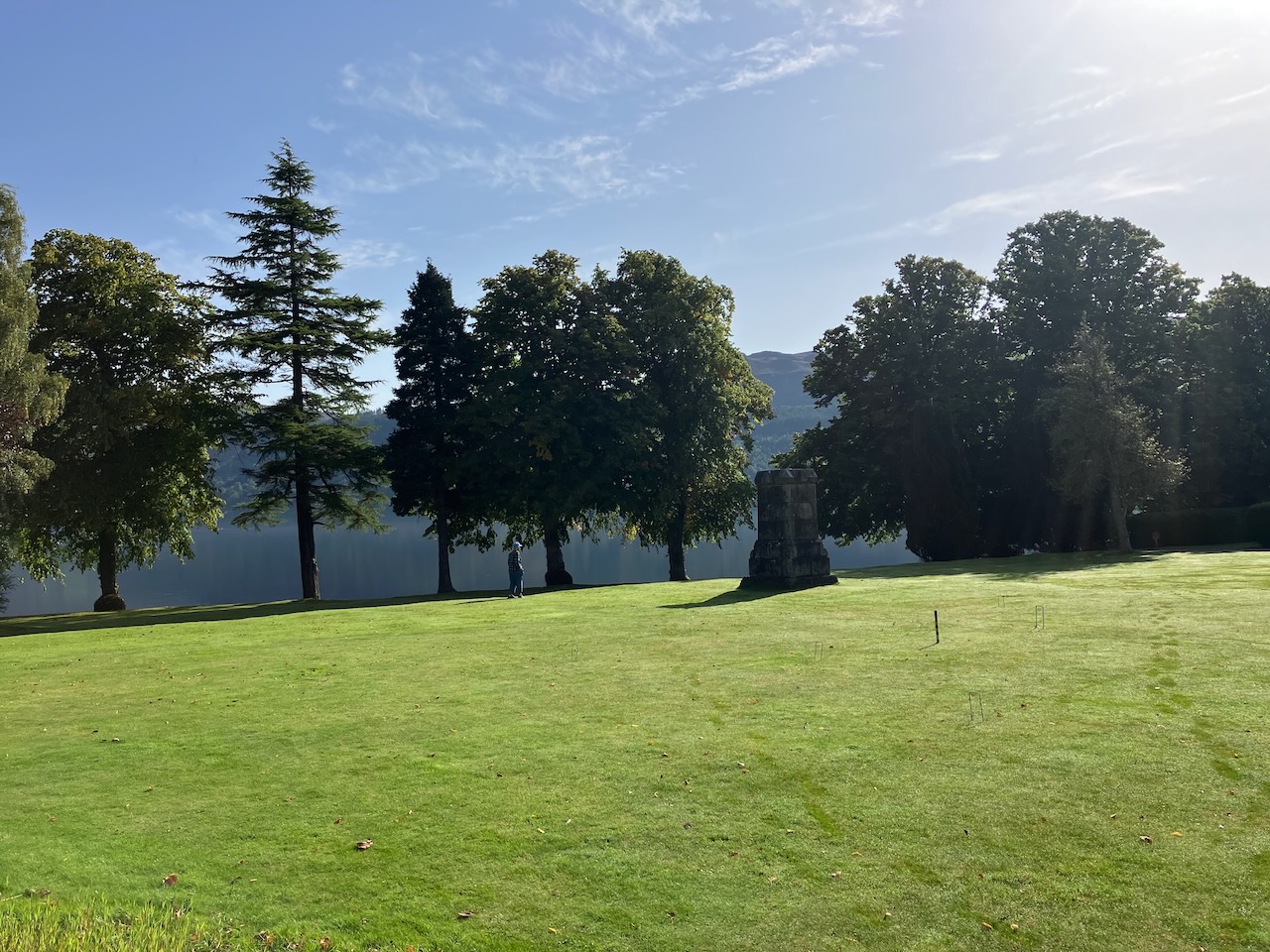
Yet, every silver lining has its cloud, and in this case, it was the absence of an elevator in this historic edifice. Our apartment, perched on the fourth floor, was not ideal for Omi, who famously disliked climbing of any sort. Ascending multiple flights of stairs became our daily ritual, but the reward was well worth the effort. From our lofty vantage point, we enjoyed a commanding view of the landscaped grounds below, with Loch Ness shimmering in the near distance, a constant reminder of the natural beauty that surrounded us.
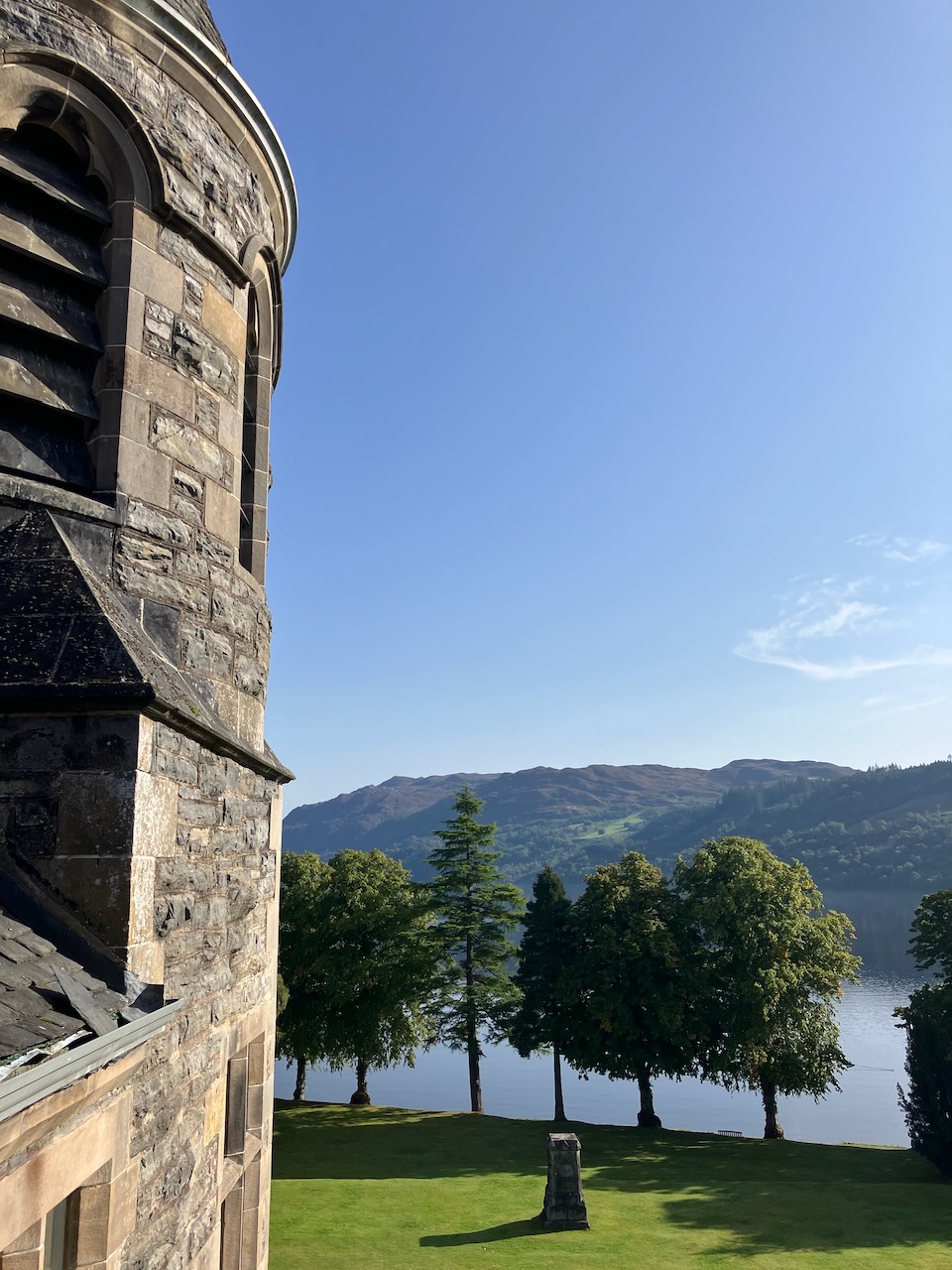
View of Loch Ness from our 4th floor penthouse window. We scanned the waters for signs of the elusive Nessie, the fabled Loch Ness Monster but she must have felt anti-social that day.
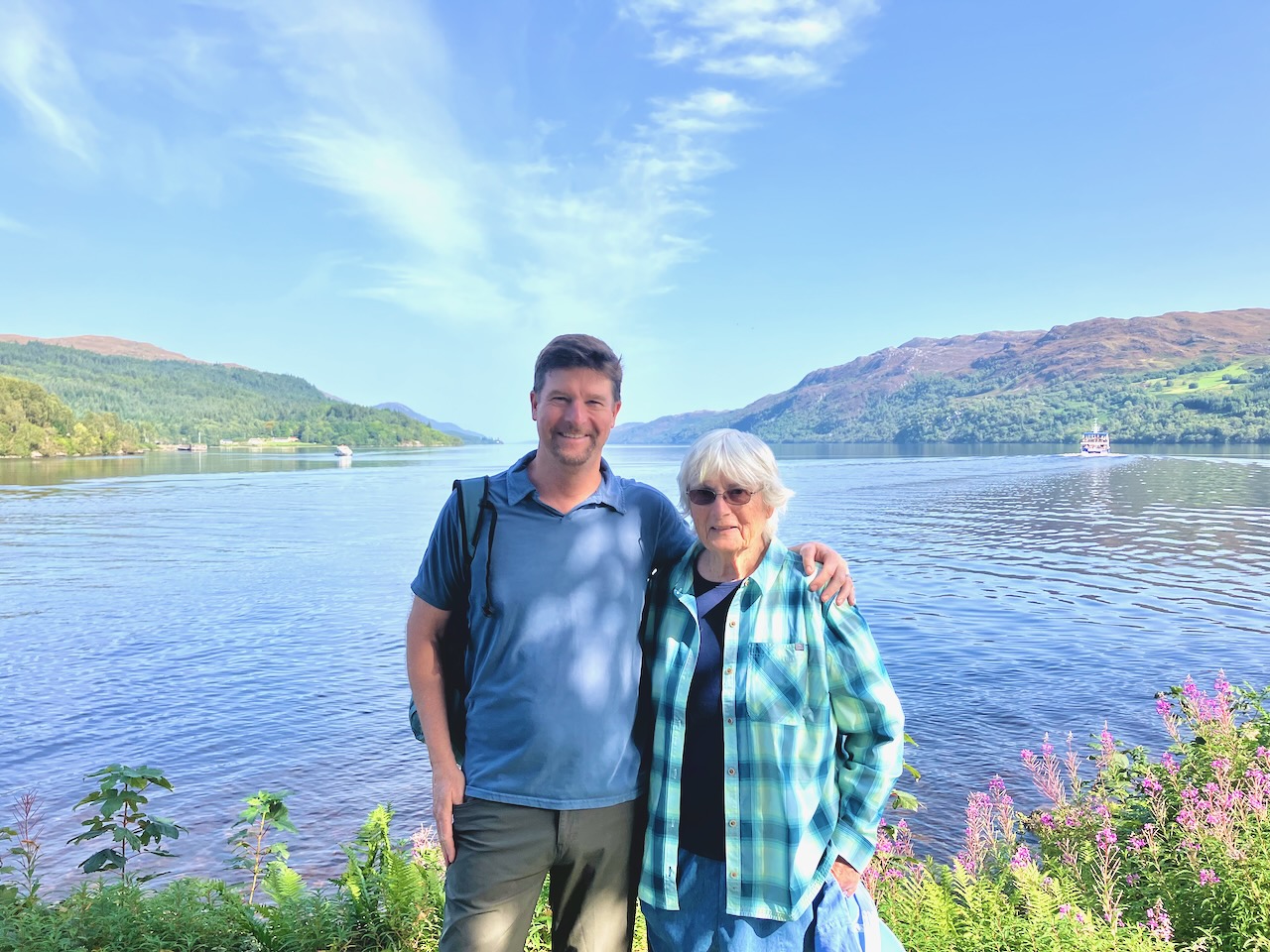
Loch Ness
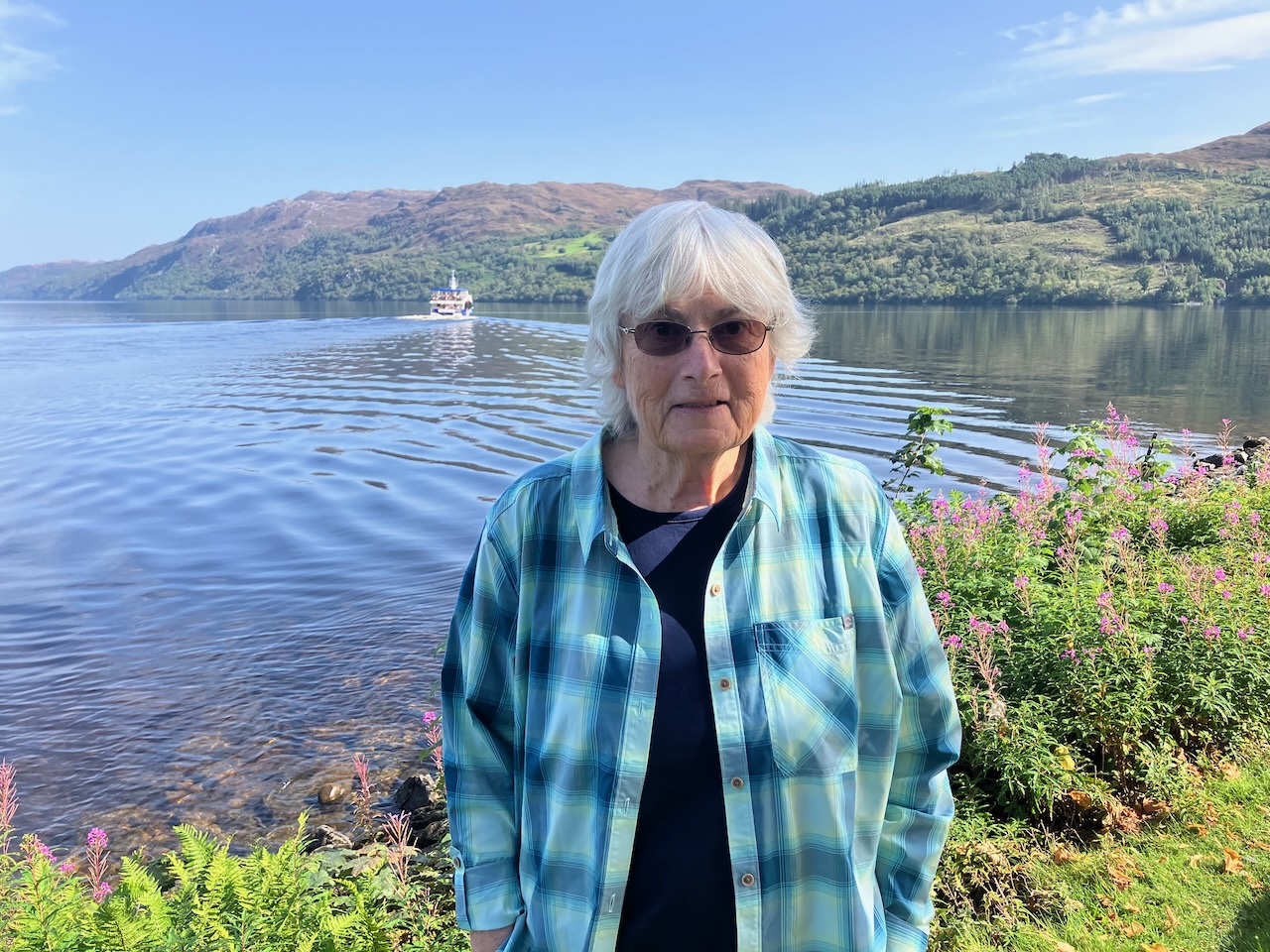
Another rainy day – just kidding!

We spent one afternoon hiking near the lake, I mean, loch.
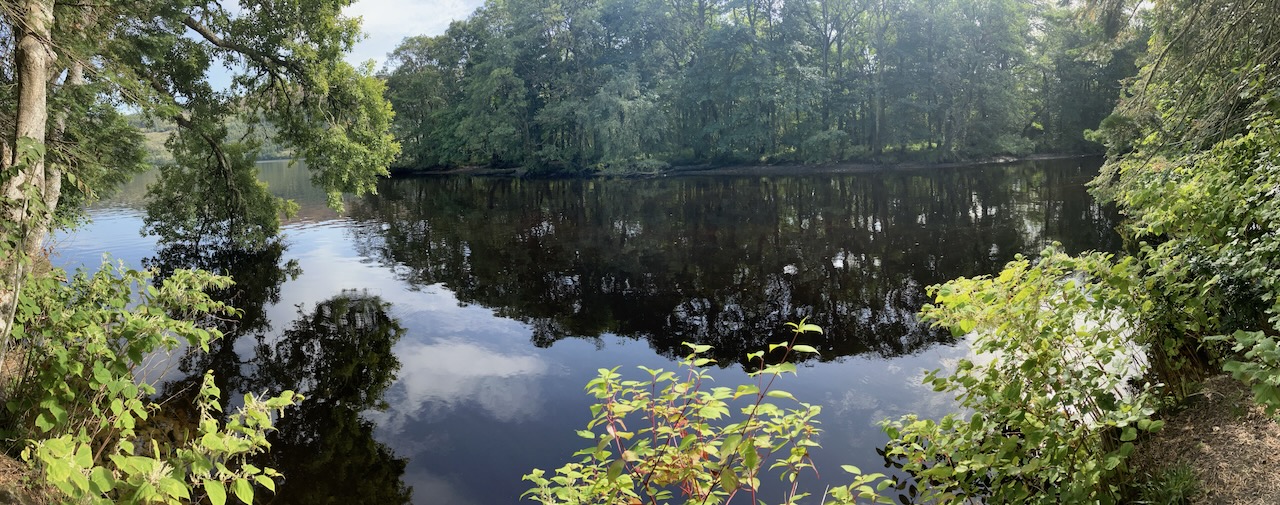
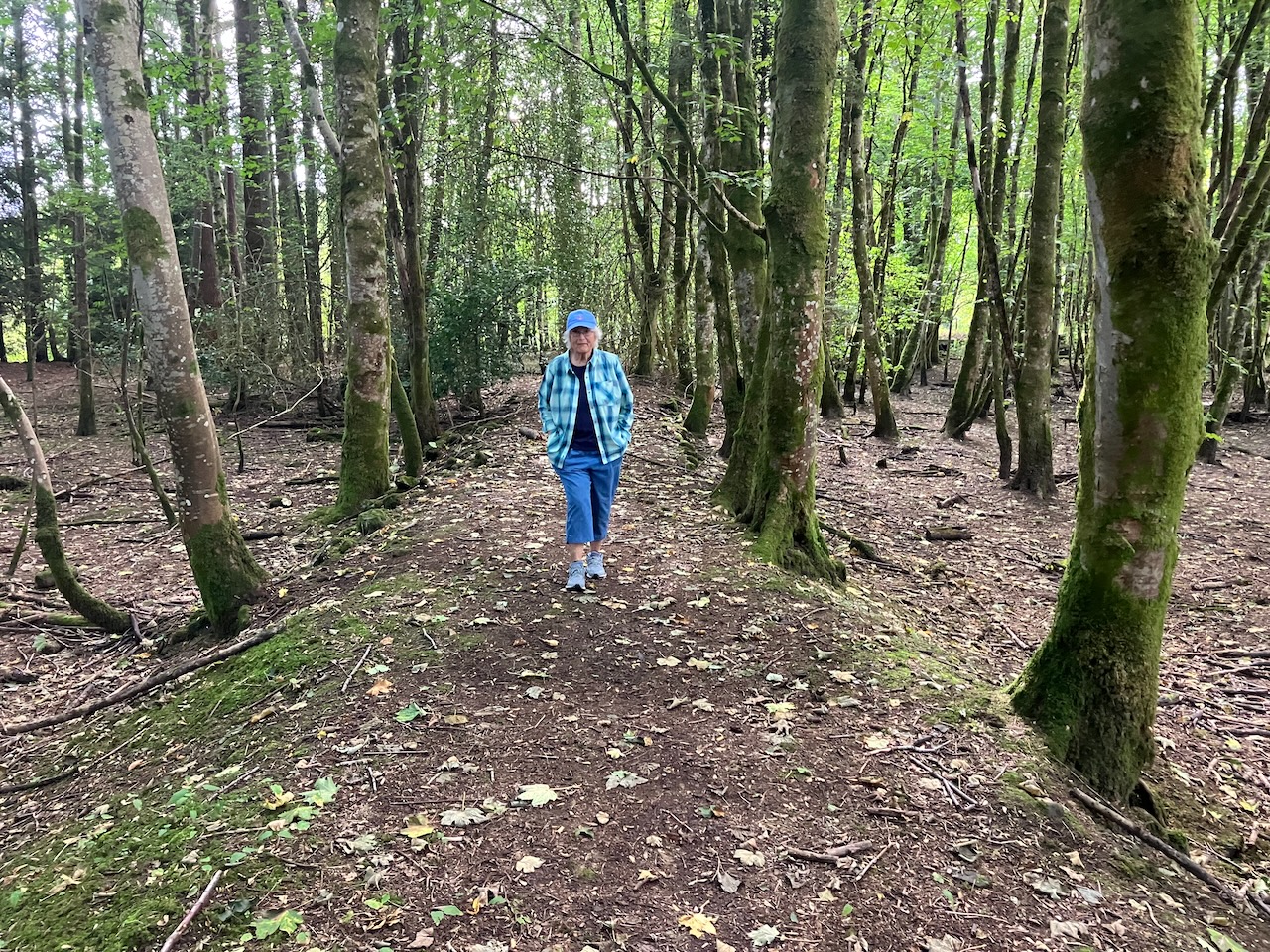
You’d expect Robinhood to gallop up to us at any moment.

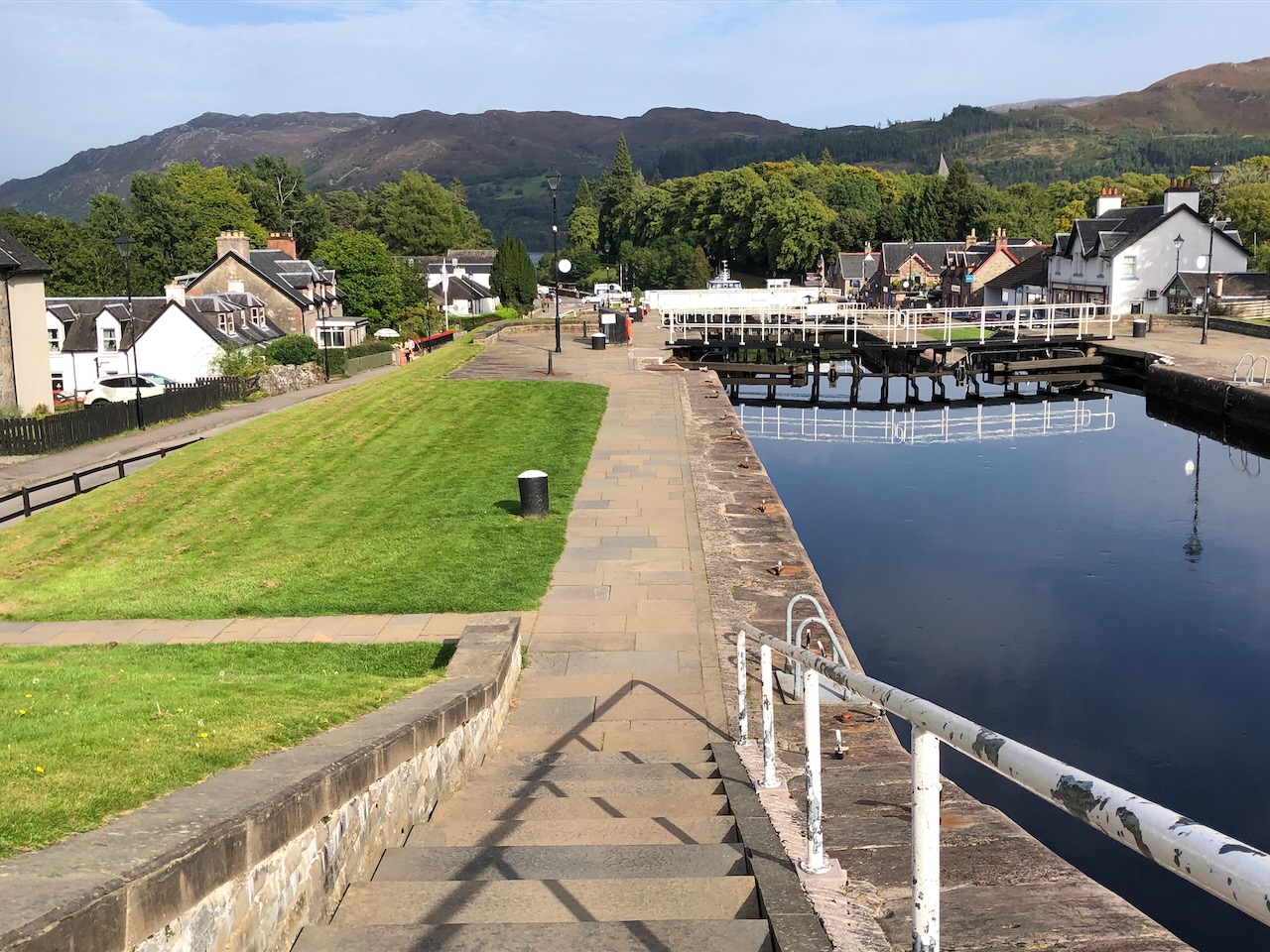
The locks at Fort Augustus.
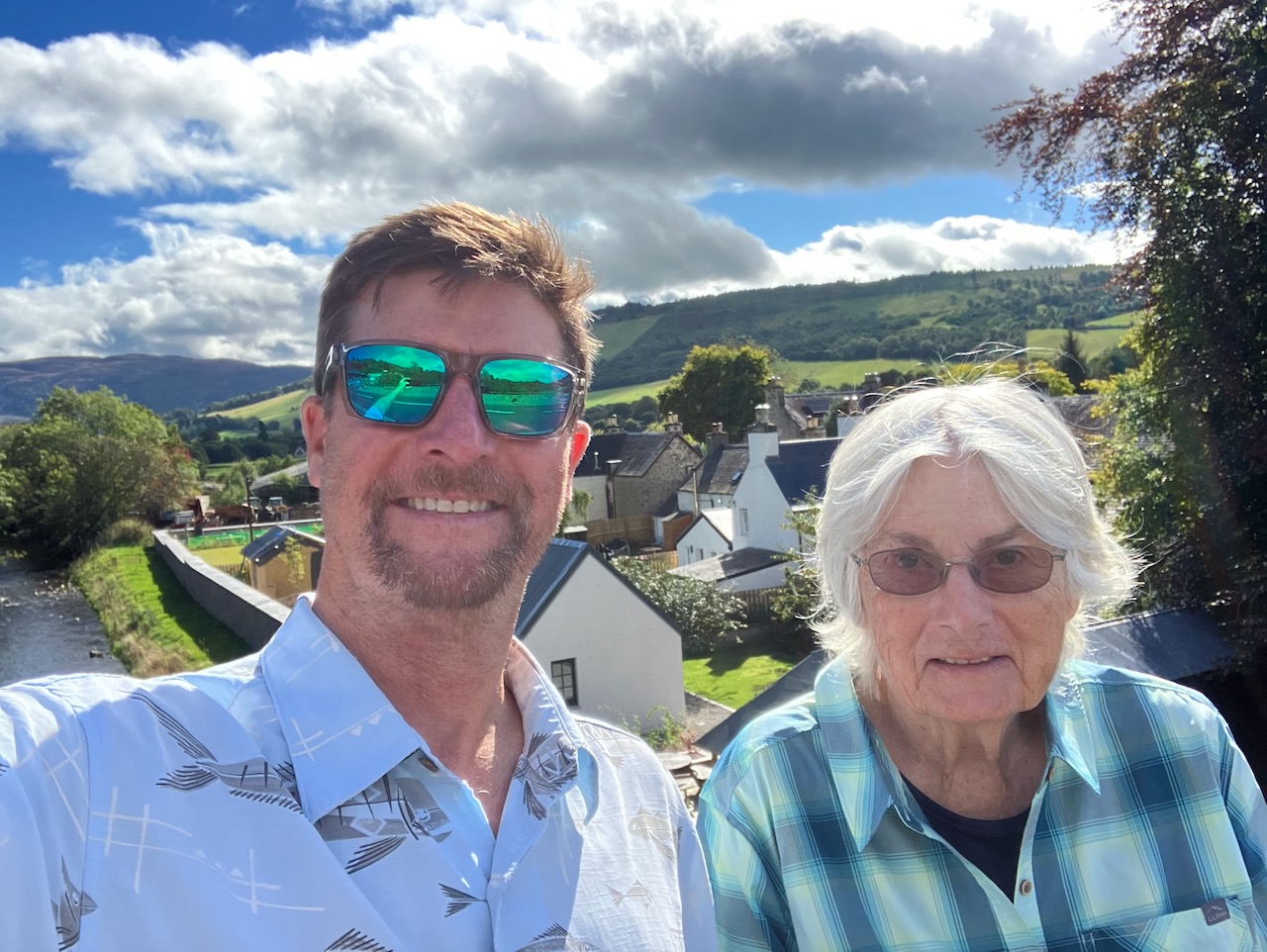
Saying goodbye to a truly memorable stay in the Benedictine monastery, daybreak found us traveling up the Loch to the interestingly named town of Drumnadrotchit. We perused the craft offerings, picked up a few choice treasures to take home, and had homemade quiche and English breakfast tea since it was indeed that time of day.
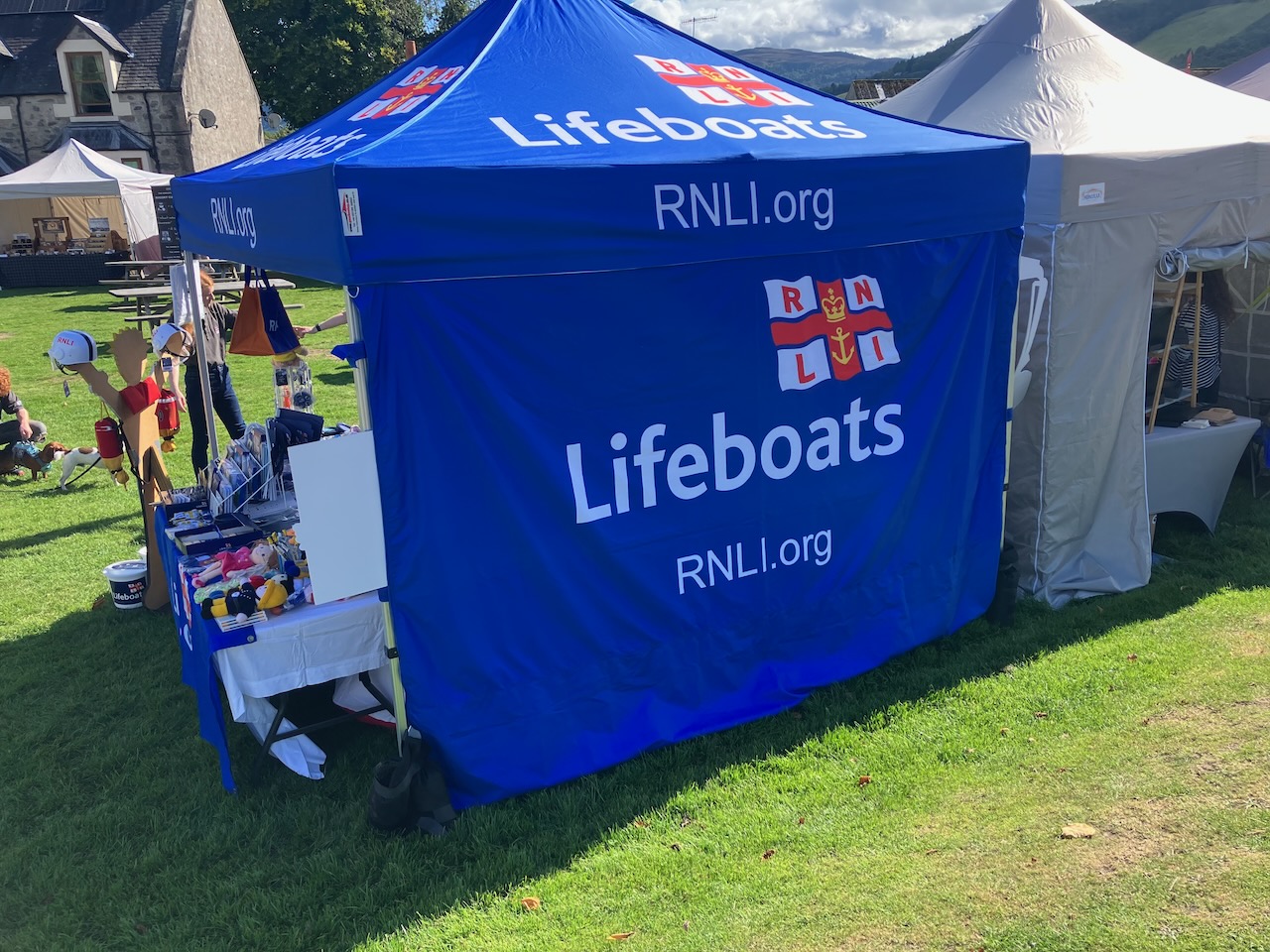
The Royal National Lifeboat Institution has 238 lifeboat rescue stations around the coasts of the UK and Ireland. We were informed that this spot on Loch Ness is the only inland station for the Lifeboats, a rescue organization sort of like the US Coast Guard, but staffed by volunteers.
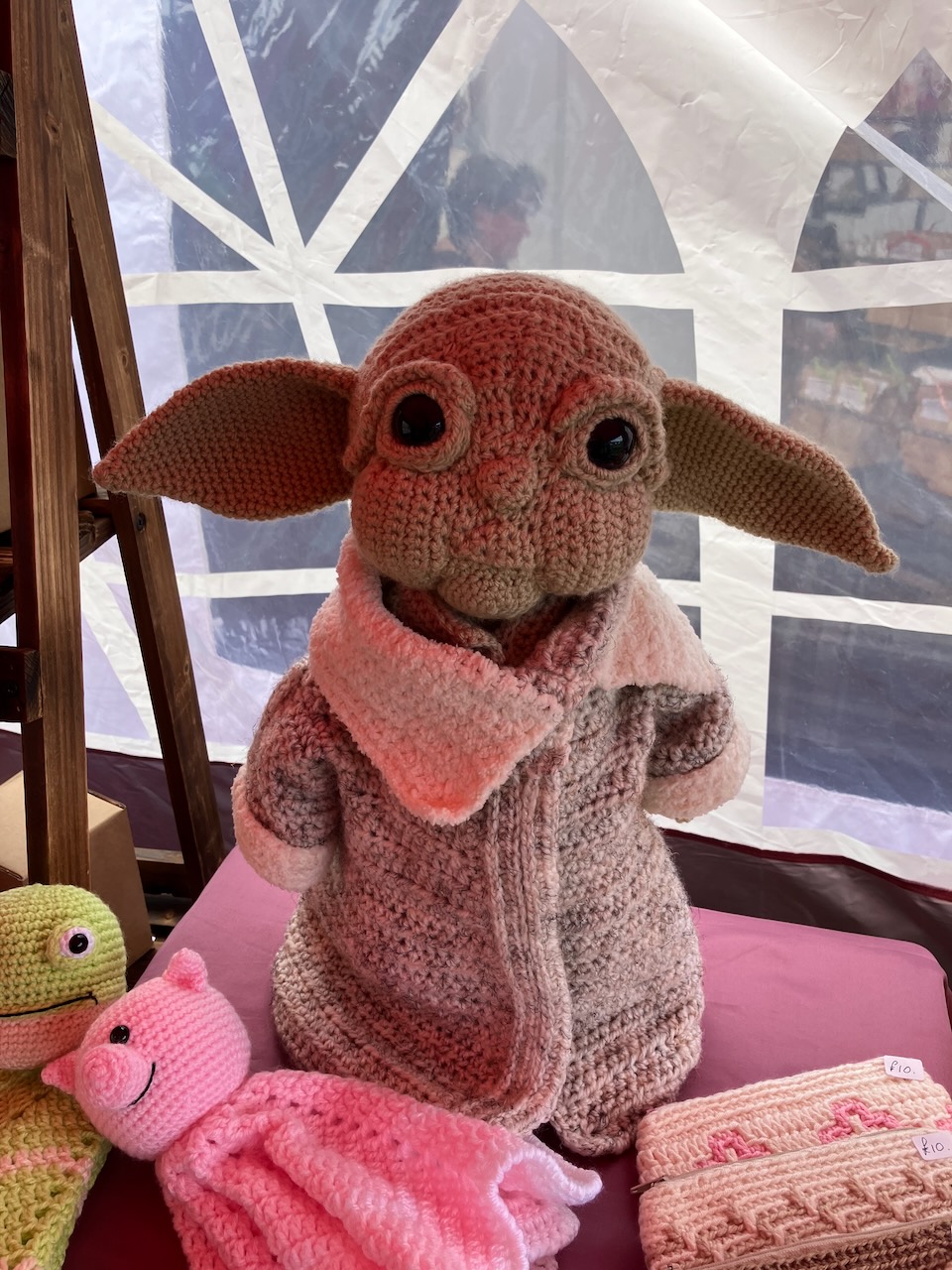
Skilled crochet-work

Wise advice
Our next stop was the battlefield of Culloden and the Cairngorms National Park. Stay tuned.
 Omi's Travels
Leave a comment